Last updated November 18, 2026
Free written scope consultation - allowances, timeline, and change-order rules on paper before a single trade is scheduled
DIY vs Professional Driveway & Pavers: What’s Safe to Do Yourself
Renting a plate compactor doesn’t make base compaction a DIY task. Proper compaction requires a proctor density test to know what 95% compaction actually means for your specific soil, and no tool rental counter provides that. We’ve watched homeowners in Doral spend $1,400 renting equipment over three weekends only to pay $6,000 two years later to tear out a base that settled unevenly under the pavers. This guide draws a precise line: which tasks are genuinely safe to handle yourself, which ones require equipment and soil knowledge you can’t rent your way into, and how to add real value to a professional project without adding risk. It’s written for Doral homeowners who want a clear answer before they pick up a shovel.
Quick Answer
Surface repair, joint sand replenishment, sealer application, and cleaning are genuinely safe to do yourself. Base preparation, drainage grading, and any work connecting to a public street or sitting within the right-of-way require a licensed contractor and usually a Miami-Dade County permit. The line isn’t about confidence or tool access; it’s about compaction testing, load-bearing calculations, and legal liability that a homeowner can’t absorb alone.
Styles & brands we work with
- Kitchen remodeling
- Bathroom remodeling
- Home additions & ADU
- Roofing
- Windows & doors
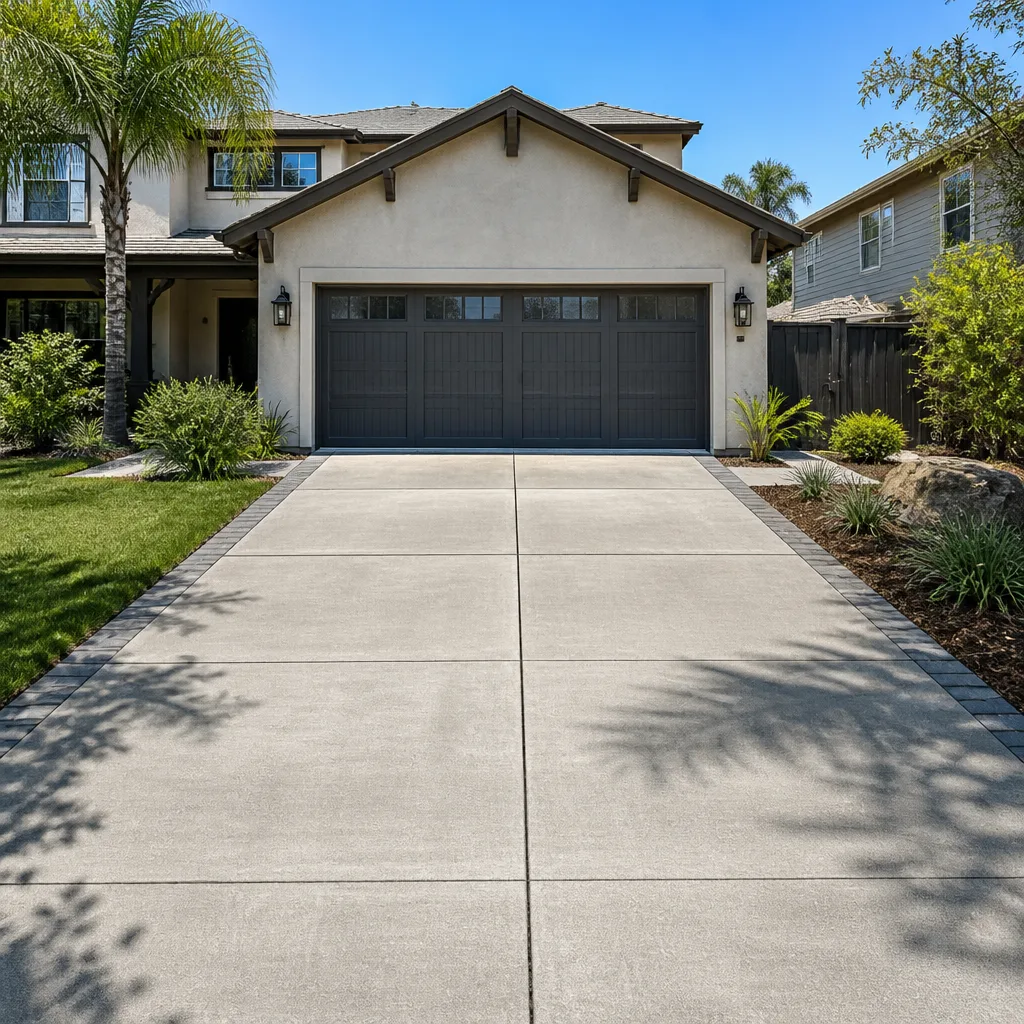
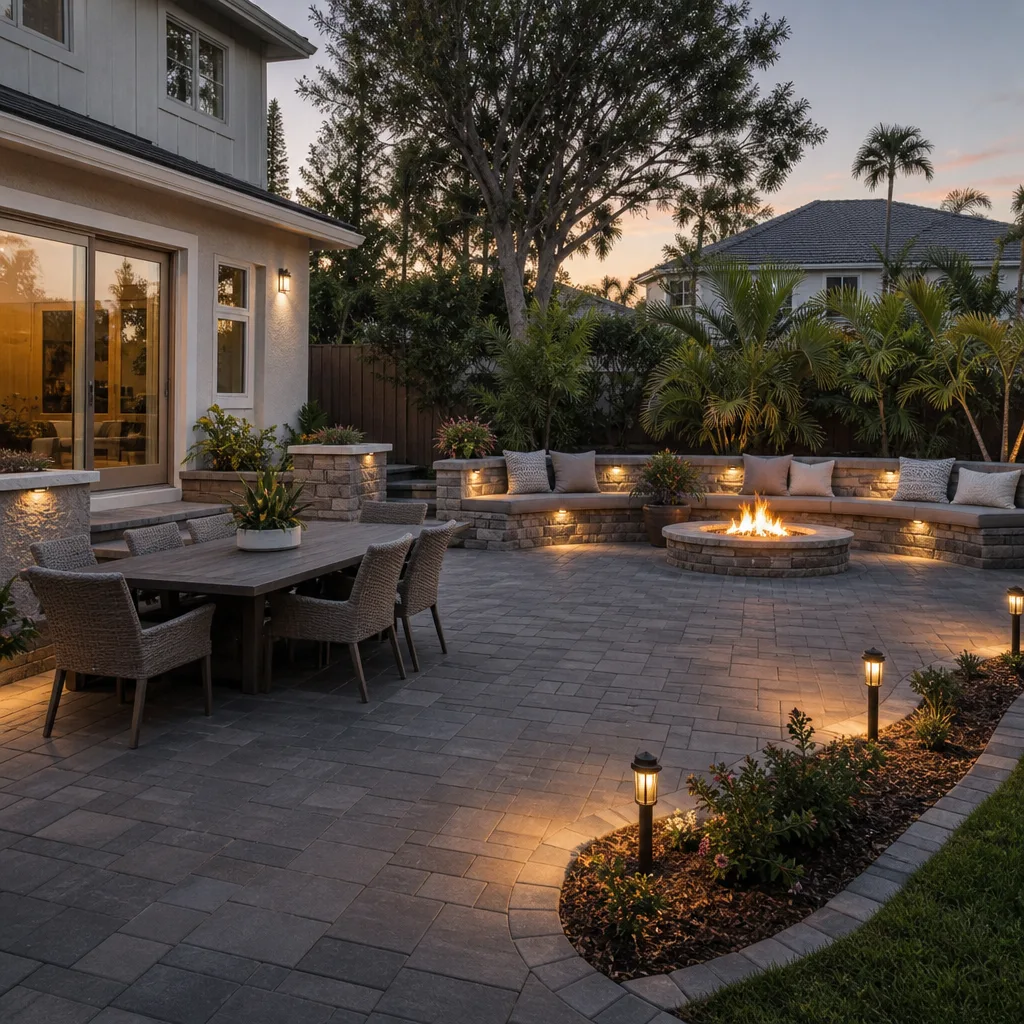
- Driveway & pavers
- Fence
Table of Contents
- Tasks That Are Genuinely Safe to Do Yourself
- Tasks That Require a Licensed Contractor in Miami-Dade
- The Equipment Reality Check
- The Base Failure Math
- Why Doral’s Climate Raises the Stakes
- What a Homeowner Can Legitimately Manage on a Professional Project
- Common Mistakes to Avoid
- Frequently Asked Questions
Tasks That Are Genuinely Safe to Do Yourself
The DIY side of this list is real. These tasks don’t touch the structural base or drainage, and they don’t require permits. What they do require is patience and a willingness to follow the manufacturer’s spec rather than guessing.
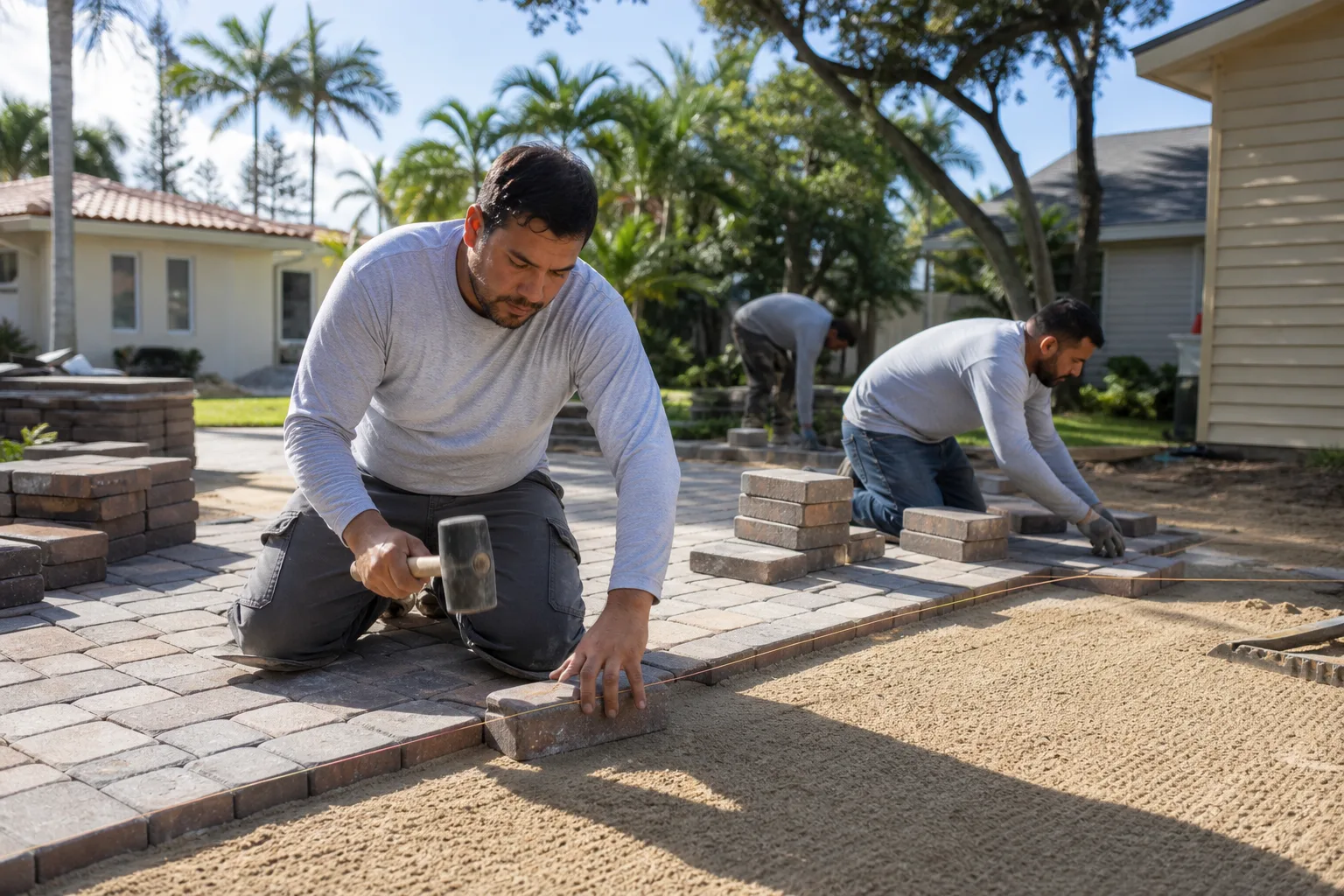
- Paver re-setting (1 to 4 units). A single heaved paver near a downspout or a couple of units pushed out of line by a tree root are manageable. You’ll need a flat pry bar or two screwdrivers, a rubber mallet, and a bag of the same joint sand. Skill prerequisite: recognizing that if five or more pavers in one area have moved, the base underneath has likely shifted and re-setting the top course will just buy you a few months.
- Joint sand replenishment. Polymeric sand breaks down slowly under foot traffic and rain. Topping off joints once a year, or twice in Doral where summer storms are intense, keeps pavers interlocked and prevents them from rotating. Skill prerequisite: applying sand when the surface is dry and the temperature is between 50°F and 85°F, then misting carefully without washing the sand out.
- Sealer application. A penetrating sealer on a clean, dry surface adds stain resistance and slows color fade from UV. Skill prerequisite: knowing whether your pavers are concrete or clay-based, because the sealer chemistry differs and the wrong product can trap moisture and cause spalling.
- Surface cleaning. A stiff-bristle broom, a garden hose, and an occasional pass with a diluted mild detergent handle most stains. Pressure washing works but requires care: keep the wand moving and stay under 2,000 PSI, because a concentrated jet on a single joint will blow the sand out and loosen the interlock.
None of these tasks change the elevation of the driveway, affect how water drains toward the street, or alter the structural base. That distinction is the whole line.
Tasks That Require a Licensed Contractor in Miami-Dade
Some work isn’t just hard; it’s regulated. In Miami-Dade County, the following requires a licensed contractor and, in most cases, a permit:
- Any work within the public right-of-way. The strip between your property line and the curb is typically owned or controlled by the municipality. Cutting into it, widening a driveway, or changing the apron requires approval from the city of Doral and often a right-of-way permit.
- Driveway aprons connecting to public streets. The apron, the flared section where the driveway meets the road, has to be built to a specific slope and thickness so it doesn’t crack under garbage truck loads or hold water at the curb line. Contractors pull the permit, the work gets inspected, and the inspection report becomes part of your property record.
- Projects that require a permit. In Doral, a new driveway, a full replacement, or any change to drainage or grading on the lot usually triggers a permit requirement. The application involves site plans and sometimes a drainage calculation. A homeowner can technically file as an owner-builder in Florida, but the liability stays with you permanently, including when you sell.
- Base preparation and grading. Even where a permit isn’t triggered, this is the task that determines whether the driveway lasts two years or twenty. We cover why below.
If you’re planning a driveway project and want to understand what a professional quote covers, our Driveway & Pavers in Doral page breaks down scope and materials. A quote from a licensed contractor includes the permit number and the inspection sign-off; a quote that doesn’t is a red flag.
The Equipment Reality Check
This is where most DIY paver projects fall apart before the first paver goes down. A plate compactor rental in the Miami area runs about $85 to $120 per day, not including the truck to haul it or the gas. But the compactor is one item on a longer list, and the list is where the budget breaks.
- Plate compactor rental: $85 – $120 per day. A proper base needs multiple passes, and the equipment usually needs to be on site for more than one day.
- Laser level: $300 – $800 to buy or $60 – $90 per day to rent. You need it to set and verify the slope; a string line alone won’t tell you if the bed is two inches low in the middle.
- Hand tamper: $40 – $70. You’ll need this for edges and corners the plate compactor can’t reach, and you’ll spend hours using it.
- Screed rails and a screed board: $100 – $250 depending on length. These set the sand bed depth consistently, which is what keeps pavers from rocking.
- Wheelbarrows, shovels, rakes, edging: another $150 – $300 if you don’t already own them.
Add the hauling costs, the dumpster for excavated soil, and the fact that a rented compactor is due back on Monday whether you’re done or not, and the DIY equipment line item typically lands between $600 and $1,100 for a driveway-sized project. That’s before you’ve bought a single paver. In our experience, most homeowners underequip on the base and overinvest in the visible layer, which is exactly backwards.
The Base Failure Math
A DIY paver driveway that fails in year two costs more to repair than a professional installation would have cost in year one, and by a wide margin. Here’s the math, using a 400-square-foot driveway as an example.
A professional full installation for that size runs roughly $8,000 to $14,000 in the Doral market, including excavation, base material, compaction, drainage, pavers, edge restraint, joint sand, and cleanup. A DIY installation where the base was undercompacted or the slope was wrong costs the homeowner maybe $4,500 to $7,000 in materials and equipment for the first attempt. When the pavers sink, heave, or pool water in year two, the repair means removing every paver, hauling them off, re-excavating the failed base, re-grading, recompacting, and re-setting. That repair typically runs $6,000 to $10,000, and the homeowner has spent $10,500 to $17,000 total for a driveway that still may not drain correctly.
The reason is that pavers are not the structure; they’re the wear surface. The base and the slope carry the load and move the water. A paver on a bad base is still a paver, but a driveway on a bad base is a future repair bill. Under the Haven Standard, the written price is delivered before any work starts, so the number you agree to is the number that holds even if the underlying soil surprises the crew. That’s the opposite of the DIY math, where the surprises come back to you.
Why Doral’s Climate Raises the Stakes
Doral sits on limestone and sandy soil that drains quickly in some areas and holds water in others, and the summer rain pattern is intense and localized. A driveway that’s short on slope or undercompacted will show it faster here than in a drier climate. In neighborhoods like Downtown Doral and the areas west of the Turnpike, we regularly see paver failures where water pooled at the base course during a June storm because the grading was off by less than half an inch. That’s the kind of error a laser level and a proper slope calculation catch; eyeballing it doesn’t.
The heat matters too. Pavers expand and contract with temperature swings that range from the high 60s to the mid 90s, and a base that wasn’t compacted uniformly will let individual units shift over a few seasons. That’s why we use Belgard and Techo-Bloc pavers with consistent thickness and an edge restraint system that holds the field in place. The same discipline applies across our other exterior work; if you’re planning a full yard project, our Fence Installation in Doral page describes how we set posts in this soil so they don’t move after the first wet season.
What a Homeowner Can Legitimately Manage on a Professional Project
Here’s where your time adds real value instead of risk. On a professional paver project, the homeowner is a decision-maker, not a laborer, and the decisions are the ones that require your taste and your budget, not your back.
- Material selection. Walk the paver samples, look at them dry and wet, and decide on the color family and unit size. This is your call, and it should be made before the quote is finalized because the material drives the price. We source across Belgard and Techo-Bloc, and the written quote reflects the actual unit cost, not a rounded number.
- Layout approval. Approve the direction of the pavers (running bond, herringbone, or a border pattern), the border treatment, and the expansion joint locations. Once the crew starts laying, changing the pattern is a change order, and under Clause 1 of the Haven Standard, no work proceeds on a change until that change order is signed. Approving the layout first means the change order never comes.
- Change order review. If you decide mid-project to add a border, widen the apron, or switch to a different edging, the change order is where the price and scope get written down. Review it before you sign it. That review is the homeowner’s real job, and it’s the reason projects stay within a few percent of the agreed price.
- Documentation review. Every visit includes a documented photo record as a standard deliverable. Read it. Look at what was found and what was done, and ask questions if something looks off. That record is your evidence if a question comes up later, and it’s part of the Rowan Construction Group Doral home service.
The right way to think about it: you’re the client, not the crew. The most valuable thing you can do is show up informed and approve decisions before the work starts.
Common Mistakes to Avoid
- Undercompacting the base. A homeowner running a plate compactor for an afternoon is not the same as reaching 95% compaction verified by a proctor density test. The pavers will look fine for a year and then move.
- Getting the slope wrong. The standard is about a 1% to 2% slope away from the house, and less than half an inch of error can pool water in Doral’s summer storms. Use a laser level, not a visual check.
- Skipping the edge restraint. The edge restraint holds the field in place; without it, the outer row creeps and the whole interlock opens up. This is a $50 part that prevents a $4,000 problem.
- Using the wrong joint sand. Polymeric sand needs dry conditions and careful misting. Washing it in with a hose ruins the binder and leaves the joints empty by the next rain.
- Working in the right-of-way without a permit. Cutting into the apron or the strip between the sidewalk and the curb without the city of Doral’s approval can result in a stop-work order and a fine, and the work has to be removed.
- Buying pavers before the base is planned. The paver thickness and the base depth are related to the load the driveway will carry. A driveway that’s expected to hold an SUV has different requirements from a footpath, and the base depth has to match.
- Ignoring drainage away from the house. Water that pools at the garage threshold will find its way inside. The driveway has to drain toward the street or a swale, and that has to be engineered into the grading, not added afterward.
See the difference
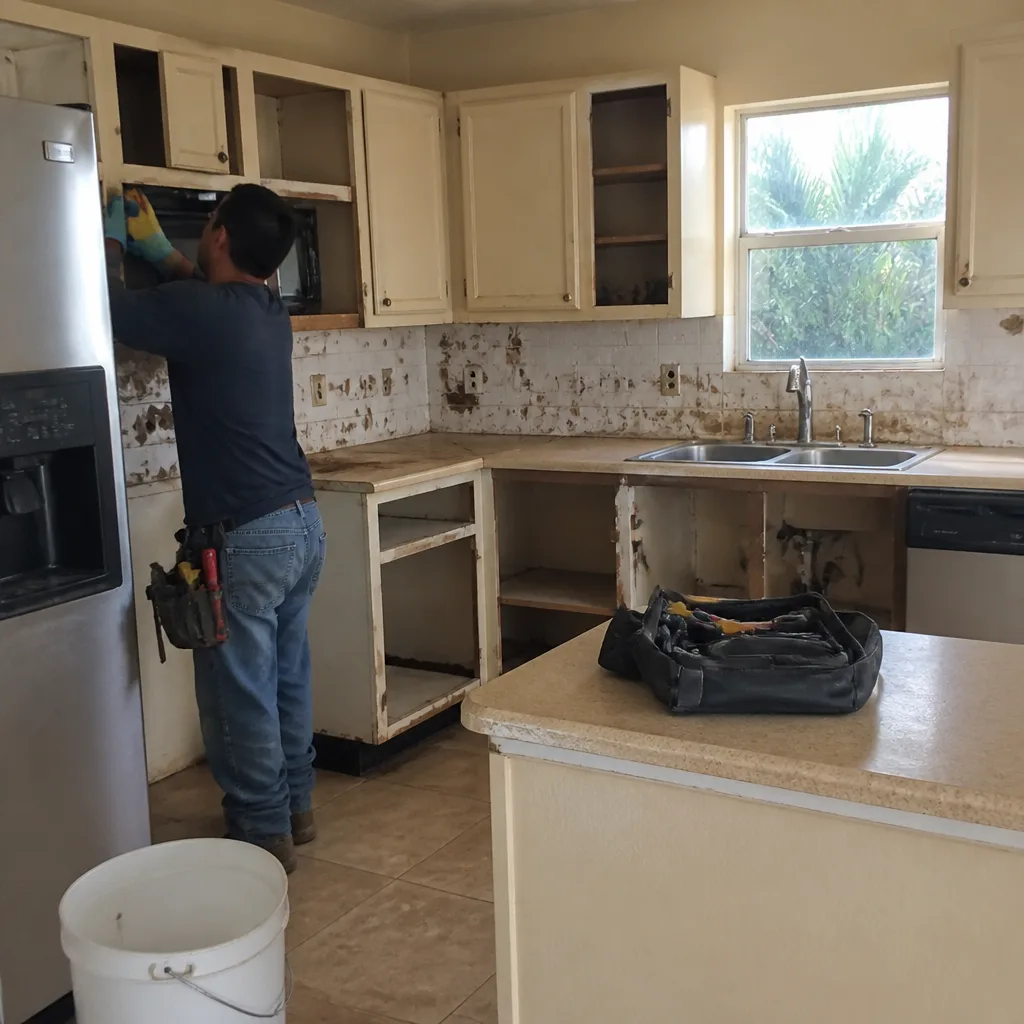 Before
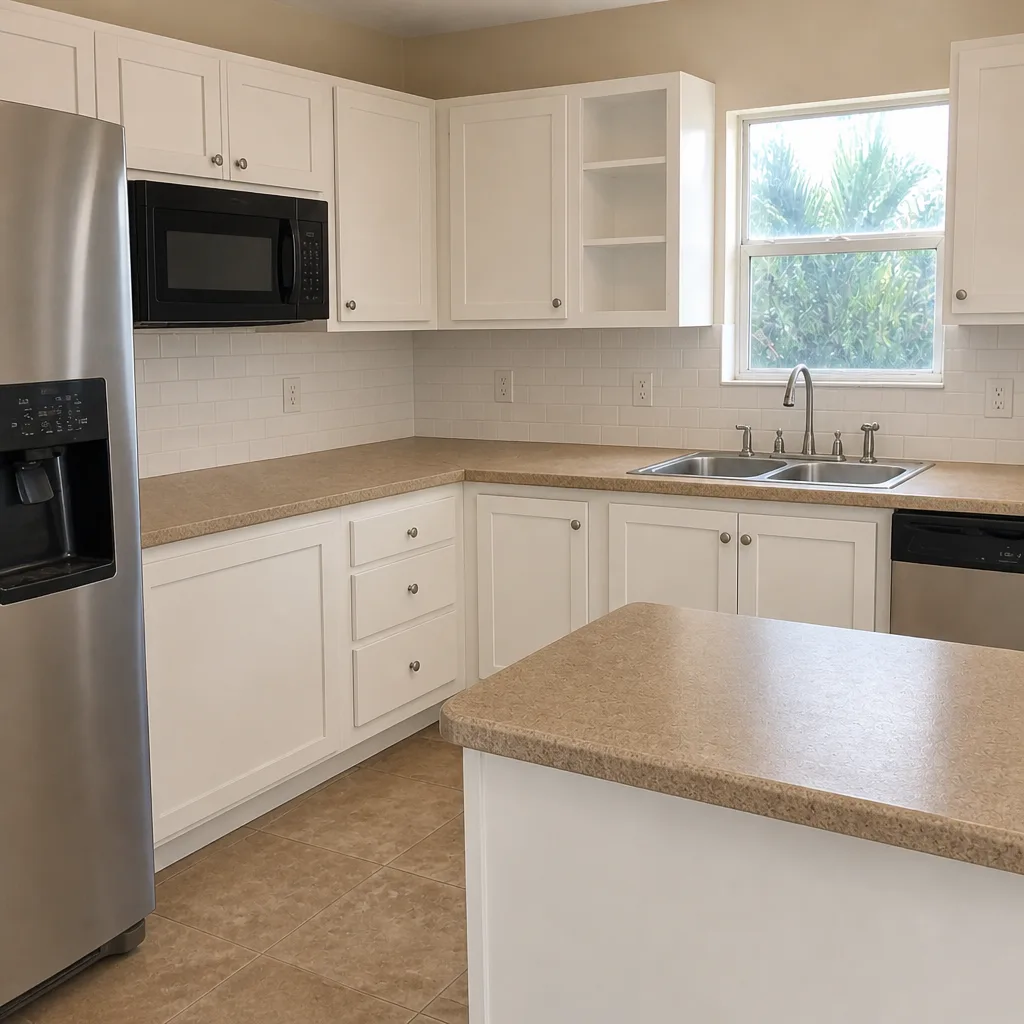 After
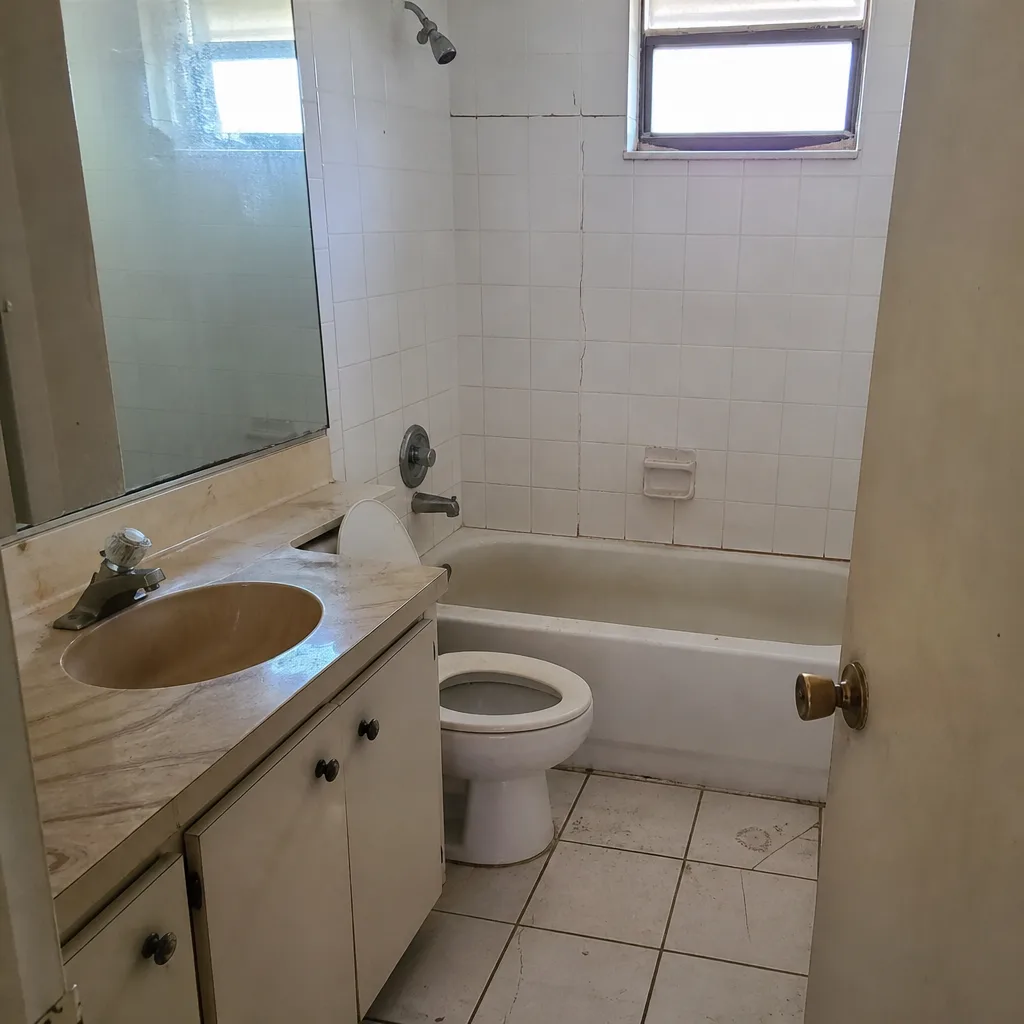 Before
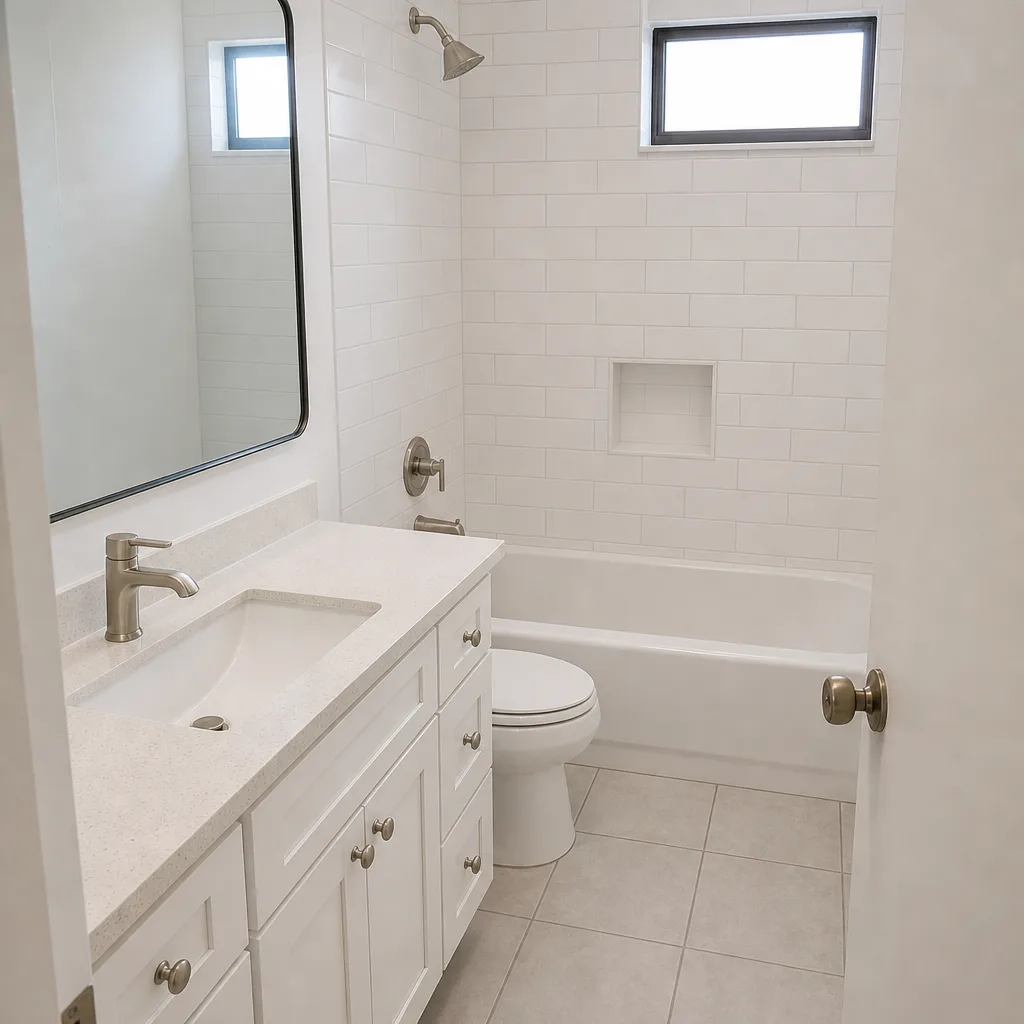 After
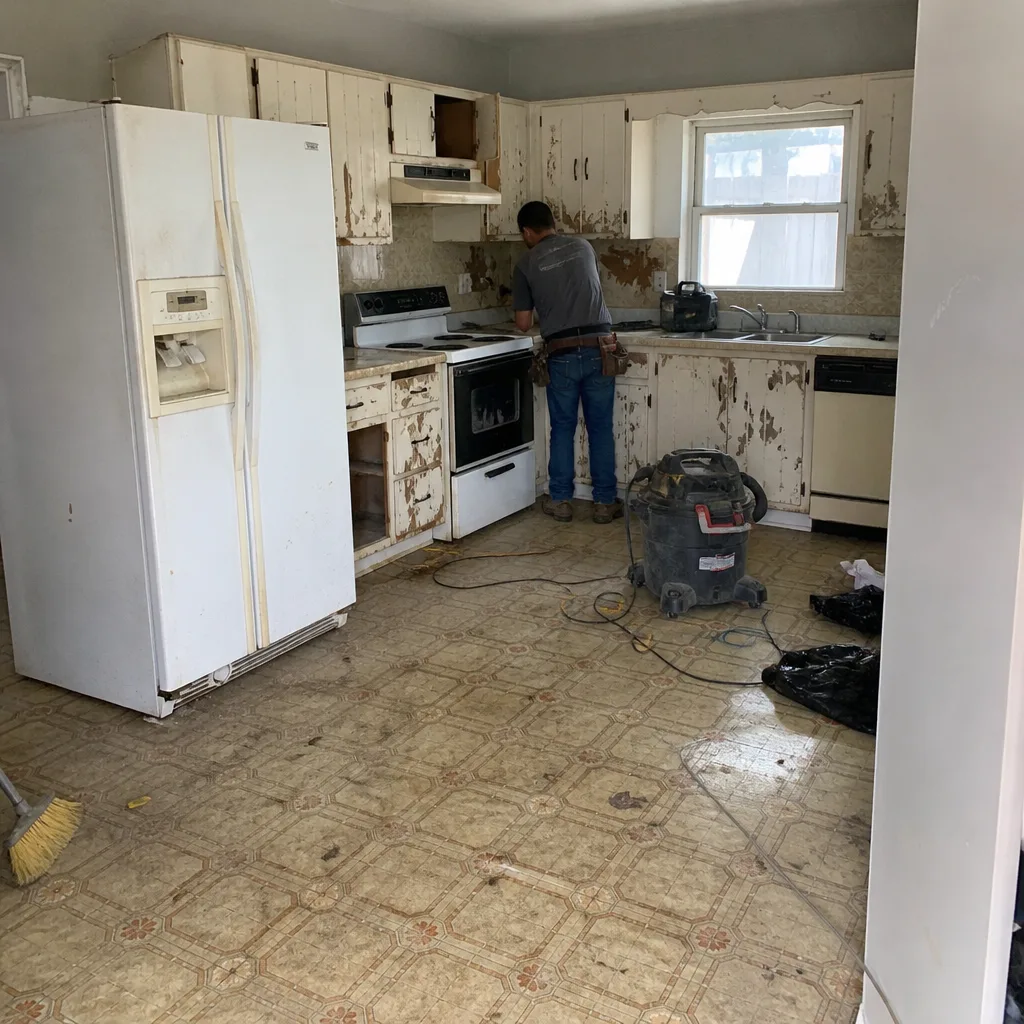 Before
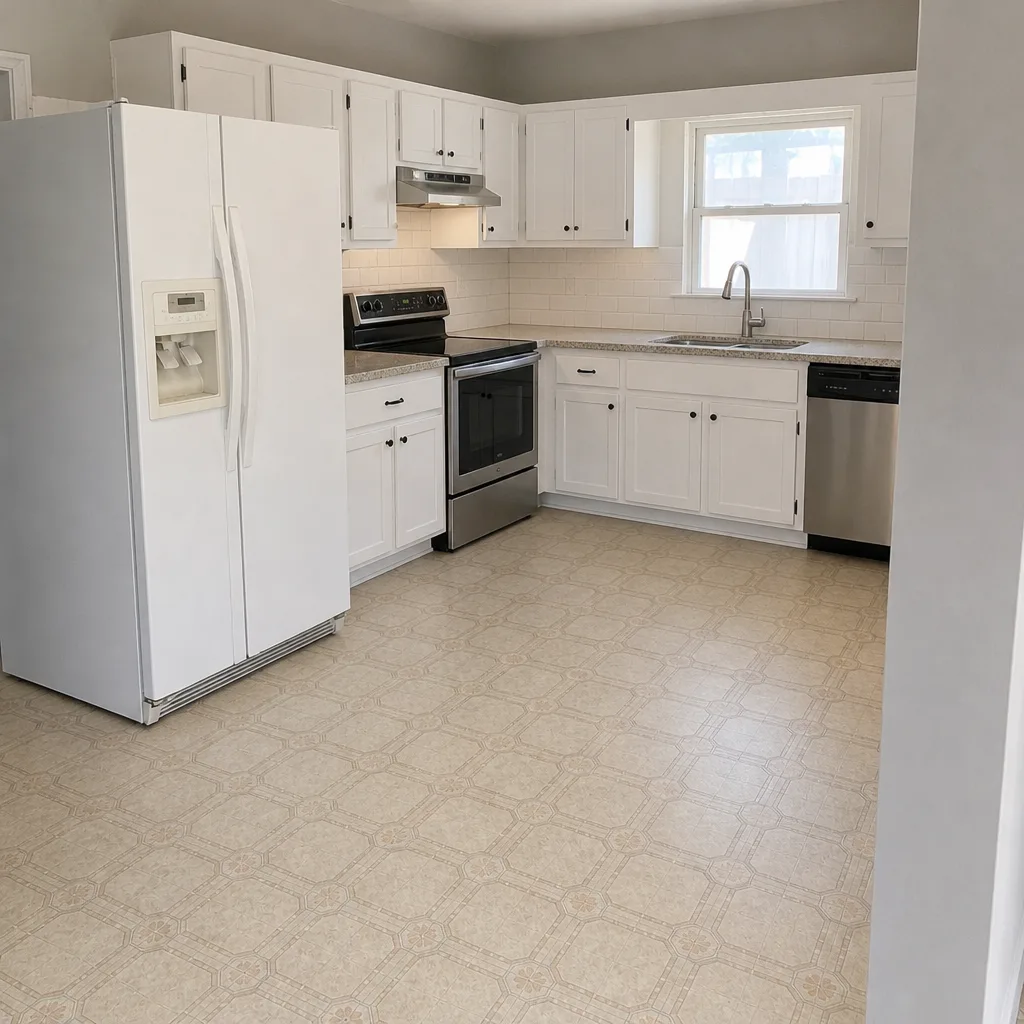 After
When to Call a Professional
Call a professional when any of these apply: the work touches the right-of-way or the apron; the driveway is new or being fully replaced; the base has failed and pavers have sunk more than half an inch across an area larger than four units; the grading needs to change to move water away from the house; the project requires a permit. Those aren’t judgment calls; they’re the scenarios where the equipment and the legal responsibility both sit on the contractor’s side. Rowan Construction Group Doral offers free estimates in Doral: call (888) 300-3896. Our technicians have up to 19 years of experience, and we’ll review a competitor’s written quote line by line at no charge if you have one. If your project is bigger than a driveway, we also quote Home Additions & ADU in Doral work, and the same written-price discipline applies.
Frequently Asked Questions
You can handle the surface tasks yourself: re-setting one to four pavers, replenishing joint sand, applying sealer, and cleaning. You cannot safely or legally handle the base preparation, grading, or any work that connects to a public street or sits inside the right-of-way. Those require a licensed contractor and often a permit from the city of Doral.
A full tear-out and rebuild of a failed base on a typical driveway runs $6,000 to $10,000, because the pavers have to be removed, the base re-excavated, re-graded, and recompacted, and then the pavers re-set. That’s more than the first attempt saved. Call (888) 300-3896 for a free on-site assessment; we’ll tell you whether a repair or a rebuild is the honest answer.
In most cases, yes. A full driveway replacement, any change to the apron or right-of-way, and any regrading that affects drainage typically require a permit. A licensed contractor pulls it and the work gets inspected. If a quote doesn’t mention a permit, ask why.
About $85 to $120 per day, not including hauling and fuel. The compactor is one item; a laser level, hand tamper, screed rails, wheelbarrows, and a soil dumpster add several hundred more. That’s before you’ve bought any pavers.
Belgard and Techo-Bloc are the two brands we source most often for driveways, because both have consistent unit thickness and a solid edge restraint system. Consistency matters more than the brand name: a paver that varies in thickness will rock no matter how well the base is built.
Yes, that’s a genuine DIY task, provided you know whether your pavers are concrete-based or clay-based and use the correct sealer chemistry for that type. The surface has to be clean and dry, and the temperature should be between 50°F and 85°F. The wrong sealer can trap moisture and cause spalling.
The Bottom Line
The honest split is this: surface repair, joint sand, sealer, and cleaning are yours. Base preparation, drainage grading, and anything touching the right-of-way or requiring a permit belong to a licensed contractor, because they need compaction testing and legal responsibility you can’t rent. A DIY base that fails in year two costs $6,000 to $10,000 to repair, more than a professional installation would have cost in year one. In Doral’s climate, the margin for error is smaller than most homeowners expect. The place your time pays off is material choice, layout approval, and change order review, and that’s a real job on its own.
If you want the number in writing before anyone picks up a tool, call Rowan Construction Group Doral at (888) 300-3896 for a free estimate. We’ll walk the driveway with you, document what we find, and give you a written price with a written scope and a written warranty. If you already have a quote from another contractor, bring it: the second opinion is free.
Written by the team at Rowan Construction Group Doral.