Last updated November 18, 2026








Free written scope consultation - allowances, timeline, and change-order rules on paper before a single trade is scheduled
Bathroom Remodeling Troubleshooting: Common Problems and How to Fix Them
A shower that smells musty within 18 months of a remodel almost never has a grout problem. It has a waterproofing membrane failure behind the wall, and re-grouting without opening the wall will not fix it. That’s the part that stings, because the membrane is the one thing you paid for and the one thing you can’t see. In a Doral bathroom, where the indoor humidity sits in the seventies for months at a stretch, the defect gets a running start. This guide works backward from the symptom to the hidden cause: the five things that go wrong after a bathroom remodel, what each one actually means behind the tile, and how to test for it before you write a final check.
Quick Answer
Most bathroom remodeling problems that show up after the tile is set trace to one of three hidden defects: an inadequate waterproofing membrane behind the tile, an exhaust fan that moves too little air for the room’s size, or a shower floor drain that wasn’t sloped at the required quarter-inch per foot. Grout cracking, musty odor, mold at the wall-floor junction, slow drains and loose tiles are symptoms, not causes. Diagnosing which of the three is behind a symptom requires testing before the contractor closes the wall – and documenting results in writing.
Styles & brands we work with
- Kitchen remodeling
- Bathroom remodeling
- Home additions & ADU
- Roofing
- Windows & doors
- Driveway & pavers
- Fence
Table of Contents
- Mapping Five Common Symptoms to Their Hidden Cause
- Flood Testing a Shower Pan: The Numbers That Matter
- Exhaust Fan Sizing in Miami-Dade: CFM, Not Guesswork
- Tile Lippage: The 1/32-Inch Threshold and How to Claim It
- Shower Drain Slope: Why a Slow Drain Is Rarely a Clog
- The Resolution Decision Tree: Warranty, Inspector, or Complaint
- Why Doral Bathrooms Fail Differently
Mapping Five Common Symptoms to Their Hidden Cause
Homeowners call us with a symptom. We need the cause. In our experience across Doral remodels, the symptom-to-defect map is remarkably consistent, and it saves a homeowner from paying for a cosmetic fix that buys six months.
- Grout cracking along a shower wall seam – usually movement, not bad grout. Either the substrate (the wall board behind the tile) wasn’t secured properly, or the tile was set directly on drywall with no cement backer board and no waterproof membrane. The crack follows the movement.
- Mold at the wall-floor junction – a wicking failure. Water is getting behind the base of the wall and climbing. The usual culprit: the membrane wasn’t lapped over the shower pan liner, or the pan liner wasn’t turned up the wall at least three inches.
- A slow drain with no visible clog – flat or reverse-sloped floor. Water pools because the pitch is wrong, not because hair is blocking the trap.
- Condensation on walls and fixtures – an undersized exhaust fan or a fan ducted into the attic instead of to the exterior. The moisture has nowhere to go, so it lands on the coldest surface.
- Loose or hollow-sounding tiles – thin-set that cured before the tile was pressed, or a wet substrate at installation. Tap with a plastic screwdriver handle; a hollow ring means the bond failed.
None of these are fixed by a tube of caulk. Each points to a process step that either happened or didn’t before the tile went on. That’s the reason our written scope for a Rowan Construction Group Doral home bathroom lists the waterproofing method as a line item, not a footnote – you can see what was specified, which is the only way to hold anyone to it later.
Flood Testing a Shower Pan: The Numbers That Matter
The flood test is the single most reliable way to prove a shower pan holds before tile covers it – and the only way to prove it doesn’t. It takes a day and a plug. Here’s the method, in the order it should happen:
- Plug the drain with an inflatable test plug seated in the drain opening. Confirm the plug is tight before you add a drop of water.
- Fill to two inches above the shower floor’s highest point. Mark the water level on the wall or the curb with a pencil so there’s a fixed reference.
- Wait 24 hours. Measure the loss against the mark. More than 1/8 inch of loss means the liner is leaking somewhere – a seam, the curb, or a fastener driven through the liner below the waterline.
- Check the room below. If there’s a ceiling under the shower, look for a damp patch or a water stain. A shower on a slab won’t show this, so the level mark is your only evidence.
Repeat the test after tile is set only when the shower sits over a living space. In a Doral condo where the shower backs onto a neighbor’s ceiling, that second test saves the kind of dispute that ends up in front of the association board. Ask for the test results in writing, with the measurement, not a verbal “it’s good.”
If your pan already leaks and the tile is set, the fix is a tear-out to the liner. There’s no patch that holds on a failed pan liner. A contractor who offers to “reseal the shower” without opening it is selling you time, not a fix.
Exhaust Fan Sizing in Miami-Dade: CFM, Not Guesswork
Bathroom exhaust in Miami-Dade is governed by the flow rate of the fan, usually stated as CFM – cubic feet per minute – and the code sets a floor. The rule most inspectors apply: a fan must move at least 50 CFM for an intermittent fan switching with the light, and if the fan runs continuously, at least 20 CFM. Practical sizing runs closer to one CFM per square foot of floor area, with a bump for a bathroom with a shower or tub. A 60-square-foot Doral bathroom wants a fan in the 60-70 CFM range. A 100-square-foot master bath with a glass shower wants 100 CFM or more.
The fan is the cheap part. The duct is where it fails. A fan rated at 110 CFM will move far less if it’s pushing through a 20-foot corrugated flex duct with three elbows, or if the duct is crushed in the attic. Diagnosing whether an installed fan actually moves air:
- Do a smoke test. Hold a smoking match near the grille, not in the shower spray. The smoke should be pulled into the grille within a second or two. If it hangs, the fan isn’t moving the volume it’s rated for.
- Check the duct run. Duct must terminate outside the building envelope at a dampered wall or roof cap. A fan ducted into insulation blows warm, damp air into the attic and does nothing for the bathroom.
- Time the mirror. Run the fan after a shower and time how long before the bathroom mirror clears. A properly sized fan clears the glass in a few minutes. If it takes ten, the airflow is short.
- Listen at the grille, then in the attic. A fan that roars in the attic but whispers at the grille has a leak or a duct that’s slipped off. Check the connection at the fan housing.
If you’re mid-remodel, this is a conversation for the framing stage, before the ceiling gets closed. Bring a competitor’s written estimate to us and we’ll review the exhaust spec line by line at no charge – our standing free second opinion.
Tile Lippage: The 1/32-Inch Threshold and How to Claim It
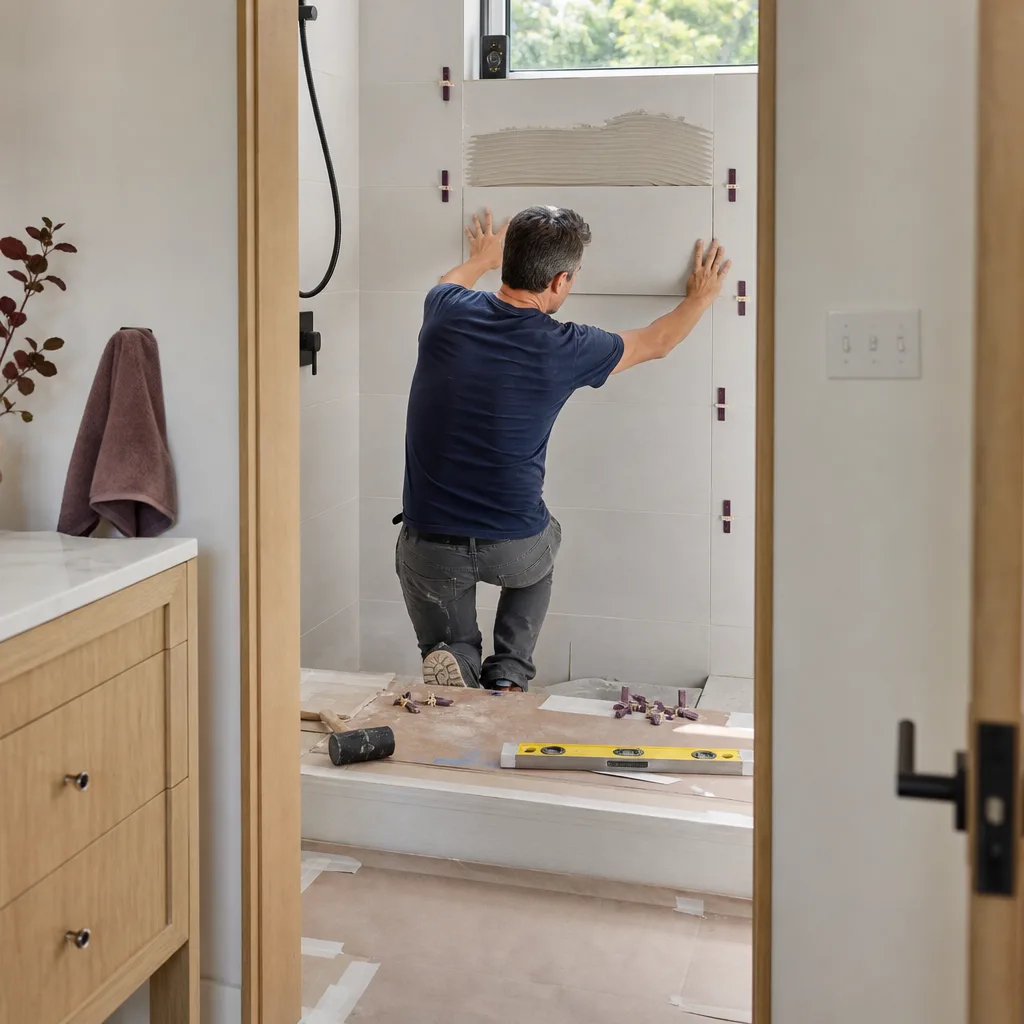
Lippage is the height difference between the edge of one tile and the edge of the one next to it. The ANSI A108.02 standard allows a maximum of 1/32 inch (about 0.8 millimeters) for tiles with sides shorter than 15 inches, and up to 1/16 inch for larger format tiles set with a specific grout joint. The numbers are small enough to read as acceptance of a small problem – but they’re the standard a claim is measured against, and a homeowner needs a way to prove they’ve been exceeded.
Document it before you pay the final invoice:
- Place a straightedge across three tile edges – a level or a metal framing square works. Where the middle tile rises above the straightedge, that gap is the lippage.
- Photograph the gap against a feeler gauge or a coin of known thickness. A dime is about 1.35 millimeters – over the limit. A penny is about 1.5 millimeters. Put the coin in the frame.
- Note the tile size, the grout joint width, and the location of each defect on the same photo. The claim is only credible with the measurements attached.
Lippage is usually caused by a substrate that isn’t flat – a backer board with a hump, or a plywood subfloor with a joint that wasn’t planed. Correcting it after the fact means removal, so document before the grout goes in where possible. Lippage caught at grout stage costs a re-lay; caught after final payment costs a negotiation.
Tile lippage is also where the flooring trade and the wall trade overlap. If you’re also finishing a garage floor or a patio, the same flatness discipline applies – our team’s write-up on Driveway & Pavers in Doral covers how base prep decides whether the surface ends up true.
Shower Drain Slope: Why a Slow Drain Is Rarely a Clog
A shower drain that pools but doesn’t back up is a pitch problem. The preslope under the pan liner should fall at a quarter-inch per foot toward the drain. That’s about 0.25 inches of drop per 12 inches of run – enough to shed water, shallow enough to keep the floor stable underfoot. When the slope is flat or reversed, water stands until it evaporates. Evaporation in a Doral bathroom is slow, so the pan stays wet, the grout wicks, and mold shows up at the floor line within a bathing season or two.
Test it before tile is set: pour a cup of water near the far corner of the shower. It should reach the drain within a few seconds without a puddle forming on the way. If it sits in a low spot, the preslope is wrong and the pan liner needs redoing. Test it after tile is set: a slow drain with a clean trap and visible water pooling at the perimeter is your evidence.
A drain that’s slow with standing water at the grate is the other problem – debris in the trap – and that is a clog. The tell is whether the water pools only near the drain or across the whole shower floor. Pooling across the floor means the slope. Pooling at the grate means the trap. Two different trades and two different invoices.
And the slope issue is more than a nuisance. A pan that doesn’t drain supports mold growth in a warm, humid bathroom. A Doral homeowner who has also replaced a roof or a window knows the same logic on other surfaces – our guide to Fence Installation in Doral covers how moisture and salt air drive material failure in the same climate.
The Resolution Decision Tree: Warranty, Inspector, or Complaint
Once you’ve identified a defect, the next question is who fixes it. The path depends on the defect type and the timeline.
- Re-call the original contractor under the workmanship warranty first. Most written warranties on tile, waterproofing and framing run at least a year. Call in writing, describe the defect in measured terms (the water level drop, the lippage gap, the CFM of the fan), and ask for a written remediation plan. Keep the email.
- If the contractor doesn’t respond or disputes the defect, hire an independent inspector. A licensed building inspector with plumbing and waterproofing experience can document the failure with the same measurements. The inspector’s report becomes the evidence in a warranty dispute and the basis for a license complaint.
- If the contractor is unresponsive or the defect is structural – failed waterproofing that has caused mold or damage to framing – a license complaint to the local building authority is the next step. The complaint needs documentation: photos, the inspector’s report, the signed scope, and the original written price. A line-item scope is the evidence that the method was specified and not followed.
We write this from the contractor’s side of the table. In our experience, the disputes that go to a license authority are the ones where the original scope was vague about the waterproofing method. That’s why every Rowan project quotes a written scope with the method on the line, and under the 365-Day Done Right Promise, if it isn’t done right, we make it right. Clause 1 of the Haven Standard is the price written before anyone starts; the scope is what makes the promise checkable.
Why Doral Bathrooms Fail Differently
Doral sits in a climate that punishes a bathroom with a bad exhaust fan and a flat shower pan faster than most of the country would. The wet season runs roughly May through October, the average outdoor relative humidity stays high, and the air conditioning runs hard enough that interior surfaces stay cool. That’s the recipe for condensation on a wall or a mirror and for mold at the wall-floor junction once moisture is trapped. A Doral bathroom that would survive a decade in a dry climate can show mold in a year here if the fan or the pan is wrong.
The local building stock adds its own complications. Many of the condo and townhome communities around Doral were built with shared plumbing walls and back-to-back bathrooms, so a shower pan leak lands on a neighbor’s ceiling before it shows in your own tile. Concrete slab construction is common, which means a flood test has to rely on the level mark because there’s no ceiling below to stain. And in a community with an association, exterior penetrations and plumbing changes can require approval that the contractor should be handling. All of that is why our free second opinion on any written estimate is worth taking before work starts in Doral – the estimate has to name the waterproofing method, the fan CFM, and the drain slope, or it can’t be checked after the fact.
Common Mistakes to Avoid
- Treating a musty smell as a grout problem. Grout is the surface; the membrane is the waterproofing. Re-grouting a shower with a failed membrane buys a few months and hides the defect while the framing keeps soaking. In our experience, the smell returns within a Doral wet season.
- Skipping the flood test because the pan “looks fine.” A shower pan holds water the day it’s built or it doesn’t. The test costs one day and a plug. The tear-out it catches costs several thousand dollars.
- Buying an oversized exhaust fan and undersized duct. A 150 CFM fan on a crushed 4-inch flex run moves less air than a 70 CFM fan on a clean rigid duct to the exterior. Size the duct to the fan and the fan to the room.
- Paying the final invoice before the lippage and slope are measured. Final payment is your only real leverage. Take the straightedge and the coin photos first, and get the measurements into a signed punch list.
- Assuming the contractor put a waterproof membrane behind the tile when the price didn’t list one. If the scope doesn’t name the membrane, it may not be in the job. Ask for the scope line and keep the written estimate.
- Ducting the exhaust fan into the attic to save a roof penetration. Damp air dumped into the attic condenses on the underside of the roof deck and feeds mold above your ceiling. It also violates the fan’s installation instructions.
Our Doral bathroom remodeling projects are quoted with the waterproofing method, fan spec and drain slope on the line because we’ve seen the cost of leaving them off. If you’re adding a bathroom or moving fixtures in a larger project, our team covers the structural side of that work in Home Additions & ADU in Doral, where the plumbing rough-in has to be permitted and inspected before the tile goes in.
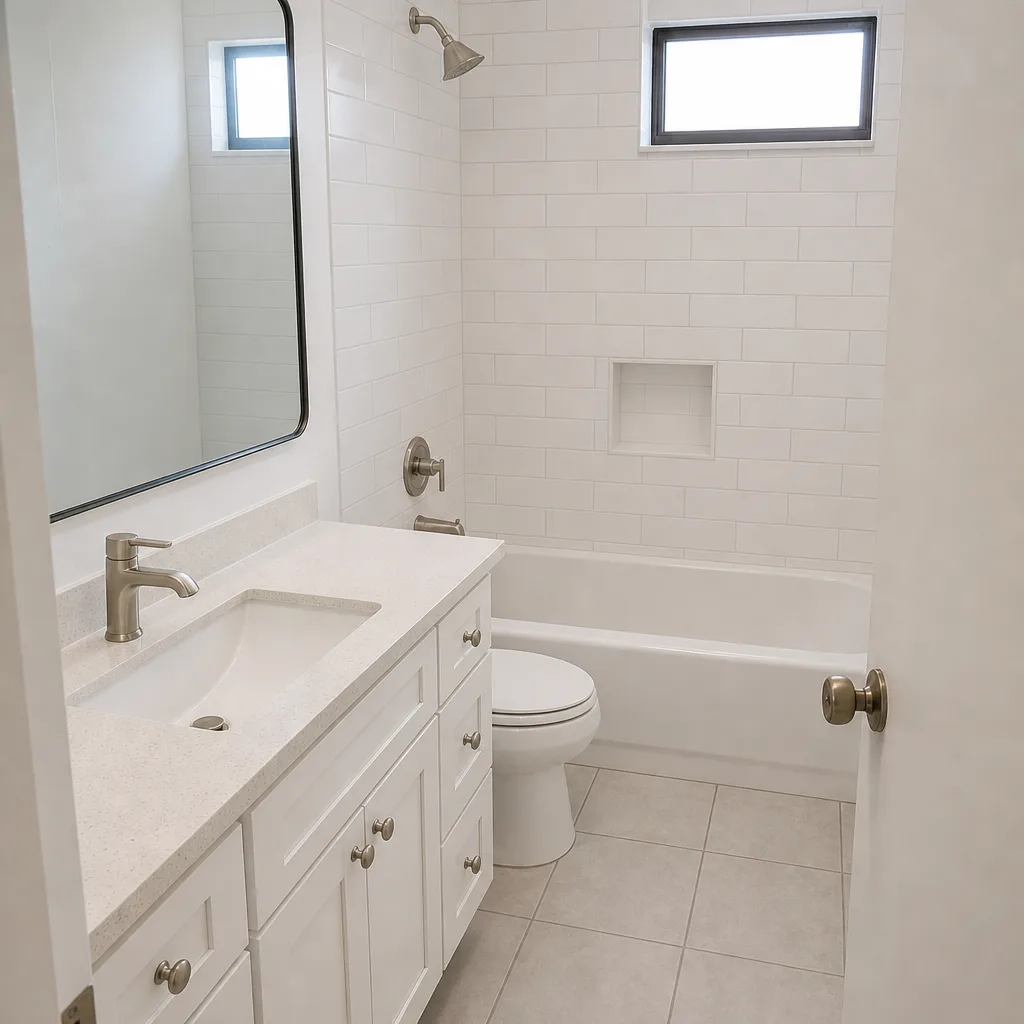
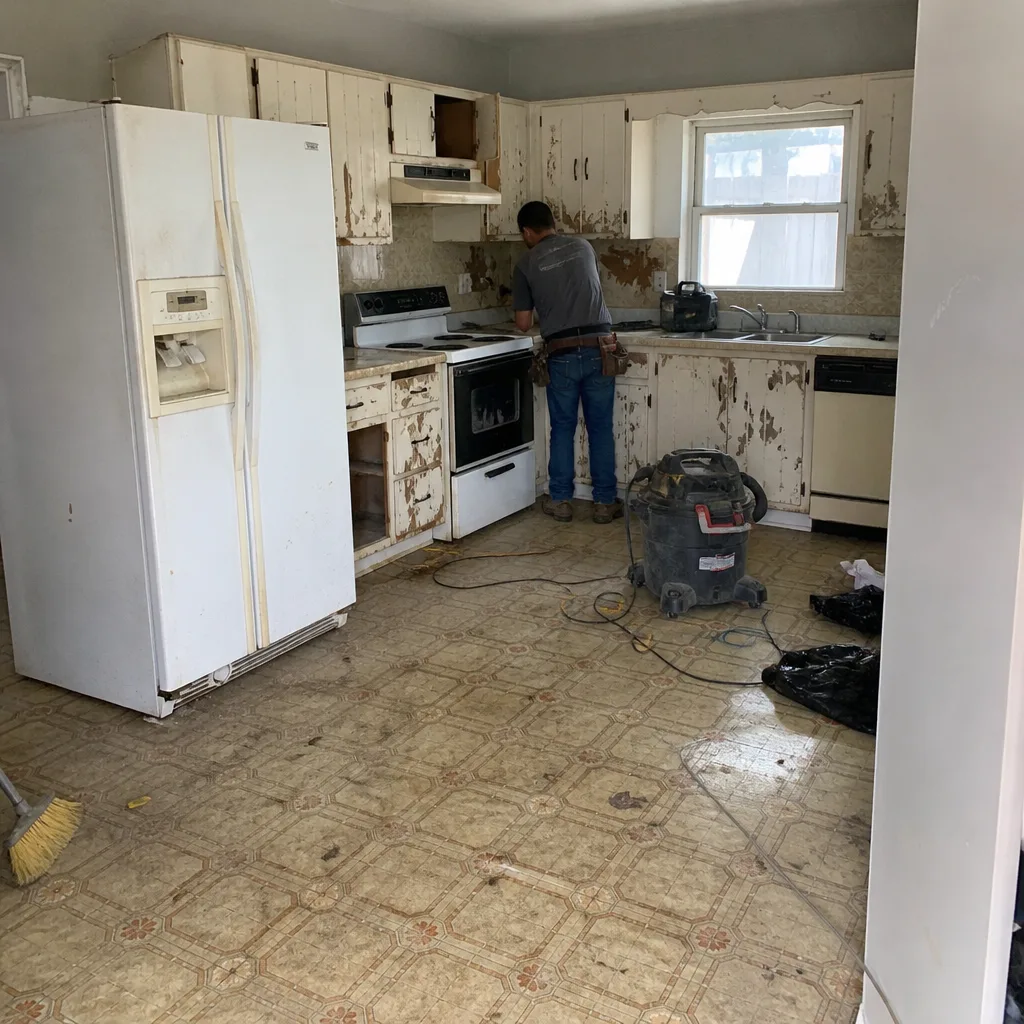
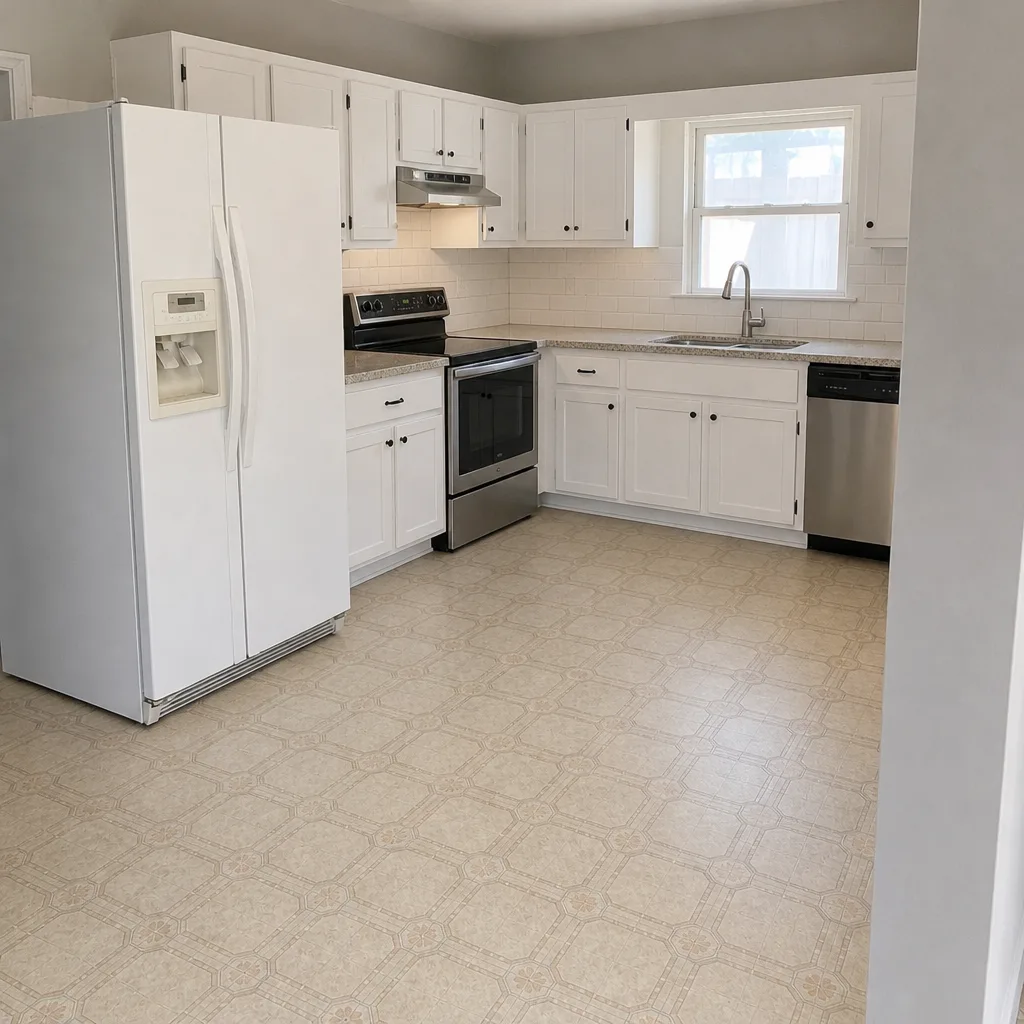
See the difference
 Before
 After
 Before
 After
 Before
 After
When to Call a Professional
Call a contractor when you can’t see what the symptom means. Musty odor with no visible mold, a shower that won’t drain after a clean-out, or condensation that returns a week after you wipe it down are all signals of a hidden defect. If you’re mid-remodel and the scope doesn’t name the membrane, the fan CFM, or the drain slope, get that in writing before the tile goes on. If the work is already finished and the shower is leaking, a tear-out is a job for a licensed plumber and a tile contractor working in sequence – not a handyman with a caulk gun.
Rowan Construction Group Doral offers free estimates in Doral. Our technicians have up to 19 years of experience and we’ll bring a written scope with the waterproofing and ventilation specs on it before any work starts. If you’ve already got a written estimate from another contractor, our free second opinion walk-through will review it line by line at no charge. Call (888) 300-3896.
Frequently Asked Questions
A diagnostic visit typically runs $150 to $350 to identify the cause, and a flood test or an independent inspector report costs more where it’s needed. If the defect is under the contractor’s workmanship warranty, the correction should cost nothing. Call (888) 300-3896 for an exact quote – estimates are free.
No, re-grouting won’t fix a musty smell if the waterproofing membrane behind the tile has failed, and it usually only hides the problem for a shower season. Grout is a wear surface, not a waterproof barrier. The smell means moisture is trapped behind the tile, so the fix starts with opening the wall and testing the pan liner.
A Doral bathroom needs at least 50 CFM for an intermittent fan switching with the light, with practical sizing closer to 1 CFM per square foot of floor area. A 60-square-foot bath wants a 60-70 CFM fan; a 100-square-foot master bath with a glass shower wants 100 CFM or more. The fan only performs at its rating if the duct is clean, rigid, and terminates outside the building – not in the attic.
Plug the drain, fill to two inches above the highest point of the shower floor, mark the level, and wait 24 hours. More than 1/8 inch of drop means the liner is leaking at a seam, the curb, or a fastener driven too low. If there’s a room below the shower, check its ceiling for a damp patch as well.
Document tile lippage by photographing a straightedge across three tile edges, with the gap measured against a coin of known thickness in the same frame. A dime is about 1.35 millimeters and a penny about 1.5 millimeters, well over the ANSI A108.02 limit. Send that photo with the tile size and grout joint width to the contractor before final payment.
File a license complaint when the contractor is unresponsive to a documented defect or the defect is structural and has caused mold or framing damage. Call the contractor back first, in writing, and keep the email. If there’s no response or no remediation plan within a reasonable window, an independent inspector’s report plus your original written scope and signed estimate are the documentation the license authority will ask for.
The Bottom Line
Bathroom failures almost always trace to one of three things behind the tile: a waterproofing membrane that failed, an exhaust fan that doesn’t move enough air for the room, or a shower drain that wasn’t sloped at a quarter-inch per foot. Diagnose by measuring, not by looking – the flood test, the CFM check, the straightedge photo. Document the numbers and keep the original written scope with the waterproofing method named on the line. In Doral, the climate rewards getting the fan and the pan right on the first pass, and the resolution path is the same for everyone: call the contractor back in writing, then an inspector, then the license authority. If you’re mid-remodel and the scope doesn’t name those three things, that’s the conversation to have now. Call (888) 300-3896 for a free estimate.
Written by the team at Rowan Construction Group Doral.