Last updated November 18, 2026


Free written scope consultation - allowances, timeline, and change-order rules on paper before a single trade is scheduled
Fence Installation Maintenance Schedule: What to Do and When
Painting a vinyl fence to “refresh” it is one of the fastest ways to void a manufacturer warranty and trap moisture against the substrate. Vinyl maintenance is wash-only. Doing more is doing damage. That single fact separates a fence that lasts 25 years from one that fades, chalks, and cracks inside a decade, and it’s the reason a material-specific schedule matters more than a generic to-do list. In this guide, we’ll walk through exactly what each fence material needs, when to do it in Doral’s climate, how to inspect after a named storm, and what to record so your warranty and your future contractors both have the facts.
Quick Answer
Fence maintenance is not one routine – it’s four. Wood needs annual cleaning plus bi-annual staining timed to South Florida’s dry season (November through January). Vinyl needs quarterly washing and nothing else. Aluminum needs an annual wash and touch-up paint on chips. Chain-link needs an annual rust inspection with galvanizing spray on bare spots. Applying a wood treatment to vinyl or aluminum is not just wasted effort; it’s actively harmful.
Styles & brands we work with
- Kitchen remodeling
- Bathroom remodeling
- Home additions & ADU
- Roofing
- Windows & doors
- Driveway & pavers
- Fence
Table of Contents
- Why Material Determines the Entire Schedule
- Wood Fence Maintenance: The Annual Protocol
- Vinyl Fence Maintenance: Wash, Don’t Paint
- Aluminum Fence Maintenance: The Low-Effort Material
- Chain-Link Fence Maintenance: Rust Is the Enemy
- Hardware Maintenance in Coastal Doral Air
- Post-Hurricane Inspection: The 10-Point Checklist
- Building a Maintenance Log That Protects You
Why Material Determines the Entire Schedule
A wood fence and a vinyl fence sit fifty feet apart in the same Doral backyard and face completely different enemies. Wood is fighting moisture, UV, and wood-destroying organisms. Vinyl is fighting UV chalking and dirt film. Aluminum is fighting salt-air oxidation at the joints. Chain-link is fighting rust where the galvanized coating has been scratched. Treat them the same and you’ll either waste money or cause damage.
We’ve seen this play out across Doral’s neighborhoods, from the newer builds near Downtown Doral to the established lots off NW 87th Avenue. A homeowner reads a general “fence maintenance” article online, buys a five-gallon pail of stain, and applies it to a vinyl privacy fence. Two summers later the fence is bubbling and the warranty claim is denied because the manufacturer’s care instructions were violated. The stain didn’t protect anything. It trapped moisture and sped up the failure.
South Florida’s climate compresses every schedule. Relative humidity sits above 70 percent most of the year, the rainy season runs roughly May through October, and the UV index climbs past 10 in summer. That means wood stain degrades faster here than in drier climates, hardware corrodes faster, and post-storm inspections aren’t optional. When the schedule below says “annual,” understand that a Doral fence is doing more work per year than the same fence in a drier part of the country. If you’re pricing a replacement rather than maintaining what you have, see our Fence Installation in Doral page for material options and installed costs.
Wood Fence Maintenance: The Annual Protocol
Wood is the highest-maintenance fence material and the one that rewards attention most. A pressure-treated pine or cedar fence that gets cleaned annually and stained on a two-year cycle can last 20 to 25 years in Doral. Skip the staining and the same fence fails in 8 to 12. The gap between those two numbers is entirely about moisture penetration and UV degradation, both of which a quality stain blocks.
Here is the annual wood protocol we recommend to Doral homeowners:
- Inspect in late October. Walk the fence line and look for loose pickets, popped nails, gray wood, and any green or black film (mildew). Note failing sections before you clean.
- Clean with a wood-safe deck and fence wash. A sodium percarbonate-based cleaner (oxygen bleach, not chlorine bleach) lifts dirt and kills mildew without damaging wood fibers. Apply with a pump sprayer, let it dwell 10 to 15 minutes, scrub with a stiff brush, and rinse. Chlorine bleach will gray the wood and is the wrong choice.
- Let it dry for 48 to 72 hours. Wood needs to reach a moisture content below 15 percent before stain will bond. In Doral’s humidity, that means checking with a pin-type moisture meter before you commit.
- Stain in the November to January window. More on this below.
- Apply a second coat the following season if the fence is new. New pressure-treated wood needs one full weathering year before it accepts stain properly.
For the stain itself, we specify two products because they perform in South Florida’s climate: TWP 100 Series, an oil-based penetrating stain that soaks into the wood rather than coating it, and Defy Extreme, a water-based semi-transparent that holds up well in high-UV environments. Both allow the wood grain to show. A solid-color deck coating will look uniform for two years and then begin to crack and peel, and once that happens, stripping the fence is a much bigger job than staining it.
Why Wood Stain Timing Matters More in South Florida
Wood stain needs at least 24 hours of cure time with no rain and relative humidity below 85 percent. Above that threshold, the stain can’t flash off solvent properly, and the result is a soft, tacky film that picks up dust and dirt and fails to bond to the substrate. The November to January window in Doral routinely delivers relative humidity in the 55 to 75 percent range and far fewer rain days than summer, which is why we schedule wood staining work in that window when we can.
Stain applied during the rainy season is money spent badly. We’ve returned to fences stained in August that were already peeling at the top rail by the following March – not because the product was wrong, but because the timing was.
Vinyl Fence Maintenance: Wash, Don’t Paint
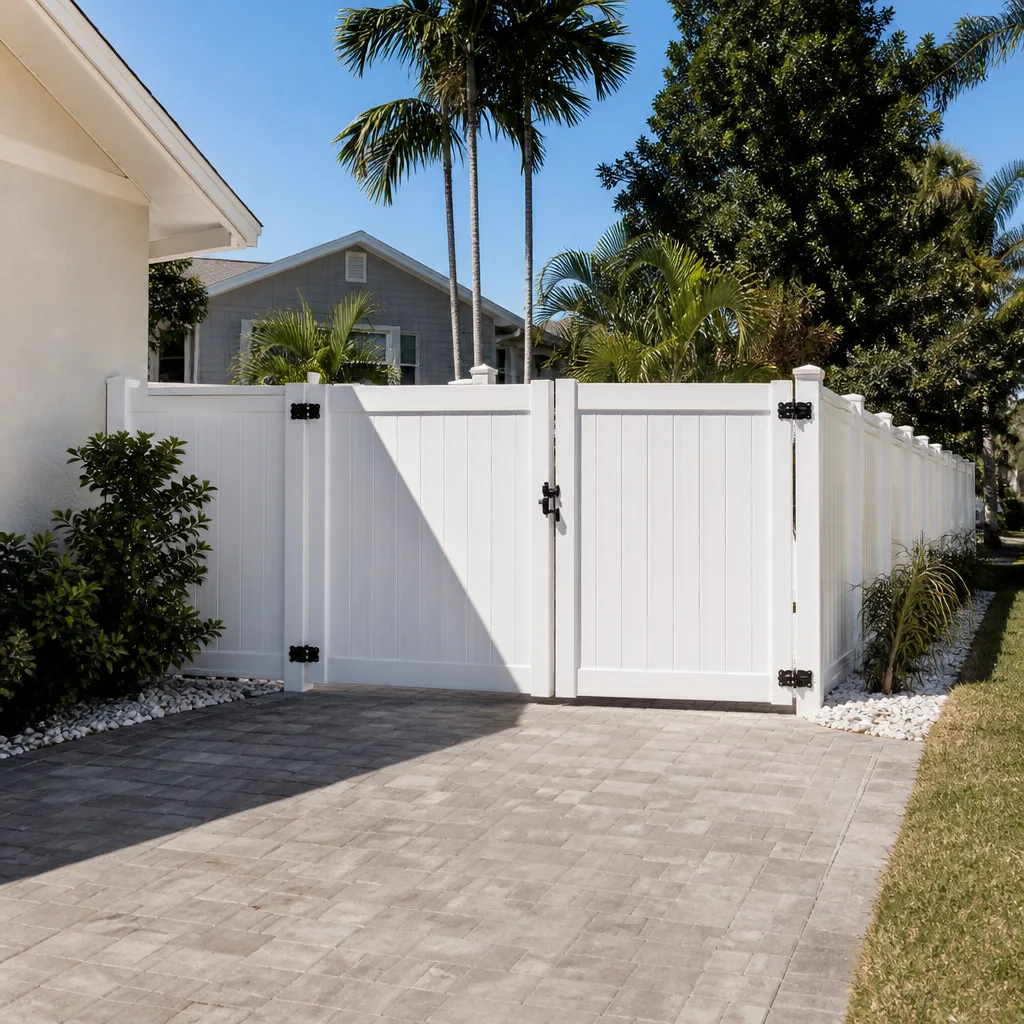
Vinyl fencing is sold as low-maintenance, and for once, the marketing is accurate. It genuinely needs almost nothing. The entire maintenance schedule is a quarterly wash with a mild cleaner like diluted Simple Green, a garden hose, and a soft brush. That’s it. No sealant, no paint, no stain.
The opening hook of this guide bears repeating because we’ve watched homeowners make this mistake: applying latex paint to a vinyl fence to “freshen” it is one of the most expensive maintenance errors we see. Most vinyl fence manufacturers – including the major extruded vinyl brands – require a specific care protocol to maintain the warranty, and paint violates it. More importantly, paint traps moisture against the vinyl substrate, and in Doral’s humidity that moisture has nowhere to go. You get blistering, peeling, and eventually staining at the base of the pickets.
The right vinyl approach:
- Quarterly: Wash with diluted Simple Green (roughly one part to ten parts water) and a soft-bristle brush, then rinse thoroughly. Pay extra attention to the bottom six inches of the fence, where irrigation spray and soil splash collect dirt and can stain the vinyl.
- Twice a year: Apply a UV protectant spray formulated for vinyl. These are inexpensive, they slow the chalking and fading that comes from Doral’s high UV exposure, and they don’t affect the warranty the way paint does.
- Annually: Inspect pickets and posts for hairline cracks at the base and around fastener holes, and check that caps are still seated. A missing post cap lets water into the post, and water inside a vinyl post in South Florida is a problem you don’t want to have.
If your vinyl fence has already been painted and is peeling, the corrective work is stripping and cleaning, which is labor-intensive. Call us for an evaluation before you attempt anything else – the condition of the substrate under the paint matters. Covered patios and pool enclosures often share adjacent vinyl fencing, and if you’ve installed or are planning a new outdoor structure, the fence maintenance schedule should account for irrigation systems, landscaping, and pool equipment within proximity. Our team at Rowan Construction Group Doral home can assess the whole exterior in one visit.
Aluminum Fence Maintenance: The Low-Effort Material
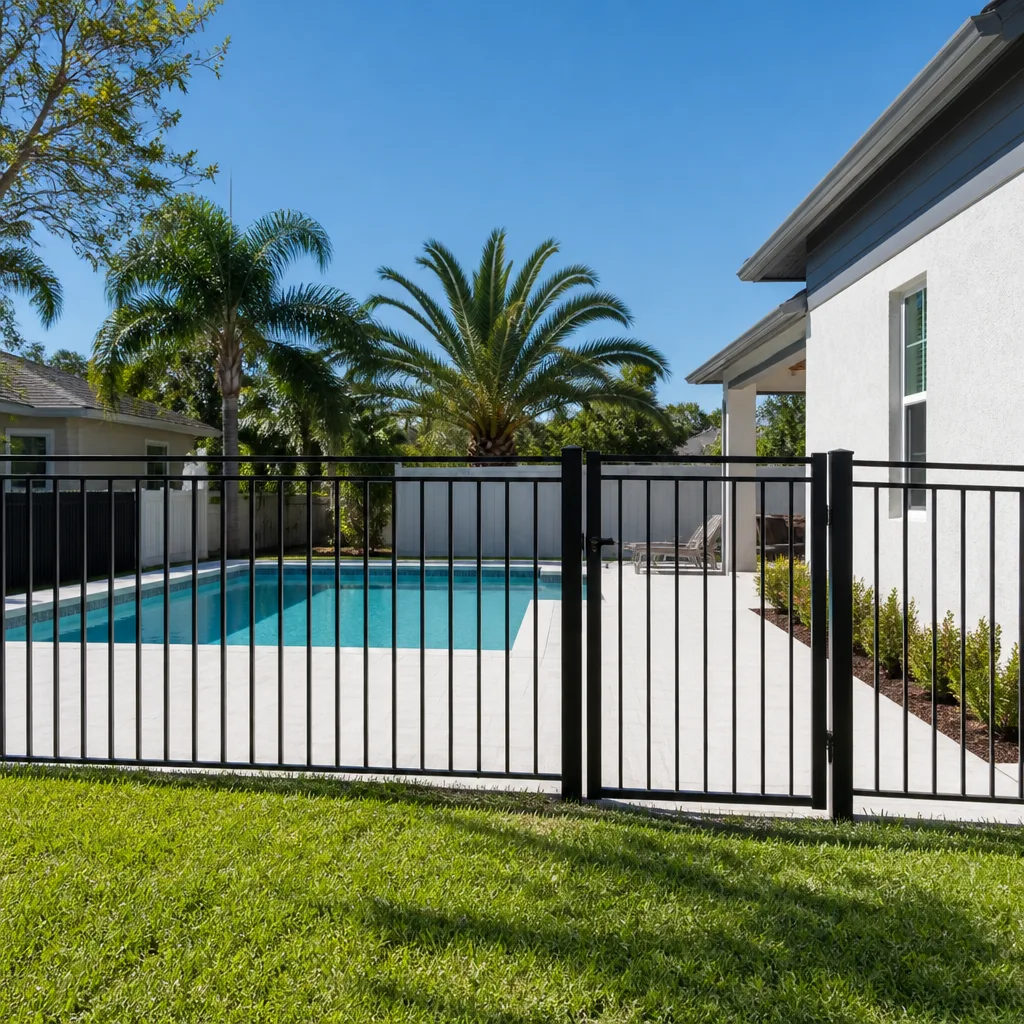
Aluminum ornamental fencing needs roughly two hours of maintenance per year. It doesn’t rust the way steel does. It doesn’t absorb moisture the way wood does. It doesn’t chalk the way vinyl can. The metal weathers, the powder coat holds, and everything stays quiet until something chips it.
The annual aluminum protocol:
- Wash once a year with a hose, a mild detergent, and a soft brush. Rinse thoroughly, especially near the coastal side of Doral where salt air deposits more quickly on horizontal surfaces like top rails.
- Touch up any chips or scratches with a color-matched touch-up paint pen (most aluminum fence manufacturers, including the major ornamental brands, sell a matching pen for each colorway). Bare aluminum that’s exposed to salt air will oxidize at the chip site, and while the oxide layer is protective, it looks brown and it’s harder to match later.
- Check the gate stop, latch, and hinges for wear. This is where 80 percent of aluminum fence “problems” actually live.
What aluminum does not need: wax, polish, sealant, or stain. Any product advertised as “metal protectant” for aluminum is likely unnecessary in Doral’s climate. If you see white powdery residue on the aluminum surface, that’s oxidation, and it means the powder coat has failed in that spot and needs touch-up.
Chain-Link Fence Maintenance: Rust Is the Enemy
Chain-link is durable but not invulnerable. The galvanized coating that protects the steel does its job until it’s scratched or worn through, at which point rust takes hold quickly in salt-air conditions. The annual maintenance for chain-link is a rust inspection and spot correction.
- Walk the fence line and look for any brown or orange spotting on the mesh, posts, rails, or hardware.
- Scuff any rust spots with a wire brush until you see clean metal.
- Apply a cold galvanizing spray (a zinc-rich compound, typically labeled “cold galvanizing compound”) to the affected spot. This restores the zinc layer that protects against further rust.
- Let it cure, then top-coat if the chain-link is painted; the cold galvanizing spray is typically silver, and a silver-top chain-link may not need a topcoat.
- Check the tension wire and gate hardware, which take more mechanical wear than the mesh itself.
Chain-link that runs adjacent to landscaping with an irrigation head nearby will often show rust at the bottom rail and in the soil-contact area. That’s a classic Doral pattern – irrigation spray combined with soil contact and constant moisture gives rust a starting point. Correcting it early turns a $15 cold galvanizing spray job into a $1,500 replacement.
Hardware Maintenance in Coastal Doral Air
The fence hardware (hinges, latches, screws, brackets) doesn’t get discussed enough, and it’s where a decade of maintenance can unravel in a single seized gate. Doral’s coastal air – salt, humidity, warm temperatures – accelerates corrosion on any metal that isn’t stainless steel or hot-dip galvanized.
Here’s the practical distinction:
- Stainless steel hardware (grade 304 or better) resists coastal corrosion for the life of the fence, typically 15 to 25 years before it needs replacement. It costs about 30 to 40 percent more than zinc-plated, and in Doral that premium is worth paying.
- Zinc-plated hardware works in inland climates but corrodes faster in coastal Doral air, typically 4 to 7 years before hinges lose smooth operation and latches seize. Lubricating hinges and latches with a dry-film lubricant like a PTFE spray twice a year extends that to 8 to 10 years.
When we see zinc-plated hardware on a fence within a few miles of the coast, we usually recommend replacing it with stainless rather than waiting for the failure. The replacement cost for a standard gate’s worth of hinges and a latch runs about $40 to $90 for the hardware itself, and it prevents the gate-sag problem that starts when a hinge corroses and over-stresses the post.
The gate sagging issue is closely tied to post integrity. If posts are set correctly with proper concrete footings, they’ll carry the gate for years. If they’re not, every hardware problem shows up compounded. When we install fences in Doral, we over-spec the gate posts for this reason. For homeowners also considering driveway or hardscape work that may interact with fence lines and irrigation, our Driveway & Pavers in Doral page covers the coordination involved.
Post-Hurricane Inspection: The 10-Point Checklist
After a named storm passes through South Florida, walk your fence line within 72 hours. The 20-minute checklist below catches problems early, while they’re still inexpensive to fix:
- Post plumb. Check each post with a level or a phone app. Any lean means footing settlement or wind stress.
- Post base condition. Look for exposed concrete footings, rotted wood at the soil line, or cracks in vinyl post bases.
- Rail attachment. Every rail should be firmly connected to its posts. Push on each rail; any movement means a fastener is missing or failed.
- Picket integrity. Look for cracked, split, or missing pickets. In wood, look for horizontal cracks at fastener points.
- Panel alignment. Fence panels should align straight. Any warping suggests post movement or rail failure.
- Gate operation. Each gate should swing freely, latch securely, and close flush. Resistance or a gap means post settlement or hinge damage.
- Hardware condition. Check every hinge, latch, and bracket for corrosion, loose screws, or damage.
- Debris. Remove any fallen branches or vegetation leaning against the fence – wet debris holds moisture and causes staining on vinyl and rot on wood.
- Concrete footings. Look for cracks around the post base. Cracks usually mean the footing failed to hold.
- Full-length photographic record. Photograph every section of the fence, including the problem spots. This is your documentation for warranty claims and for insurance if you file a storm claim.
Post-hurricane is also when professional inspections pay for themselves. Storm damage often looks minor until the next wind event reveals the weakness. If you’re in Doral and notice any of the ten points above, call us. A documented inspection costs nothing for the photos and gives you a written record. If you’re also considering a pergola, pool enclosure, or other structural work that touches the property line, our Home Additions & ADU in Doral page walks through how projects coordinate with existing fence lines.
Building a Maintenance Log That Protects You
A maintenance log sounds bureaucratic until you need it. Then it’s the difference between a warranty claim paid and denied. Most fence manufacturers require documented maintenance to honor certain claims. Future contractors also need it: when you sell the home or hire someone to repair a section, a maintenance record tells them exactly what products were used, when, and under what conditions. That’s the difference between a contractor who knows your fence and one who guesses.
What to record after each inspection or maintenance task:
- Date and weather conditions (temperature, humidity, rain in the preceding 48 hours). This matters especially for wood staining – it’s the record that proves you applied under proper conditions.
- Task performed (cleaned, stained, washed, touched up, hardware replaced, inspection only).
- Products used by brand and exact name (TWP 100 Series in Cedar Tone, Simple Green at 1:10 dilution – write it exactly).
- Photos of each section, labeled by post or panel number.
- Problems noted (a cracked picket, a rusty fastener, a slightly leaning post) even if you don’t fix them that day.
- Contractor names and dates if any professional worked on the fence.
Keep the log in a shared drive or a folder with the warranty documents and installation paperwork. When you hire us for a fence repair or inspection, that log becomes part of the project file, and we work from it. It’s the same principle as the documented photo record we provide on every visit – the information is what turns a household problem into a managed, recorded, and eventually resolved issue.
Common Mistakes to Avoid
- Painting a vinyl fence. This voids most manufacturer warranties and traps moisture against the substrate. The correct maintenance is washing only.
- Staining wood in the rainy season. In Doral, applying stain between May and October means high humidity and rain risk. The bond fails, and the money is spent twice.
- Using chlorine bleach as a wood cleaner. Chlorine strips the natural wood color and leaves the surface gray. Use oxygen bleach instead.
- Skipping the two-year re-stain window. Wood stain in South Florida has roughly a 2-year service life in high-UV exposure. Stretching it to 4 or 5 years allows moisture penetration that compounds the cost of correction.
- Ignoring small rust spots on chain-link. A five-dollar cold galvanizing spray applied early prevents a five-hundred-dollar section replacement later.
- Skipping post-storm inspections. Fence damage from wind is cumulative. A post that took a partial hit in one storm fails in the next.
- Not keeping a maintenance log. Without it, warranty claims are unprovable, and future repairs are guesswork. Write down what you did, when, and with what.
See the difference
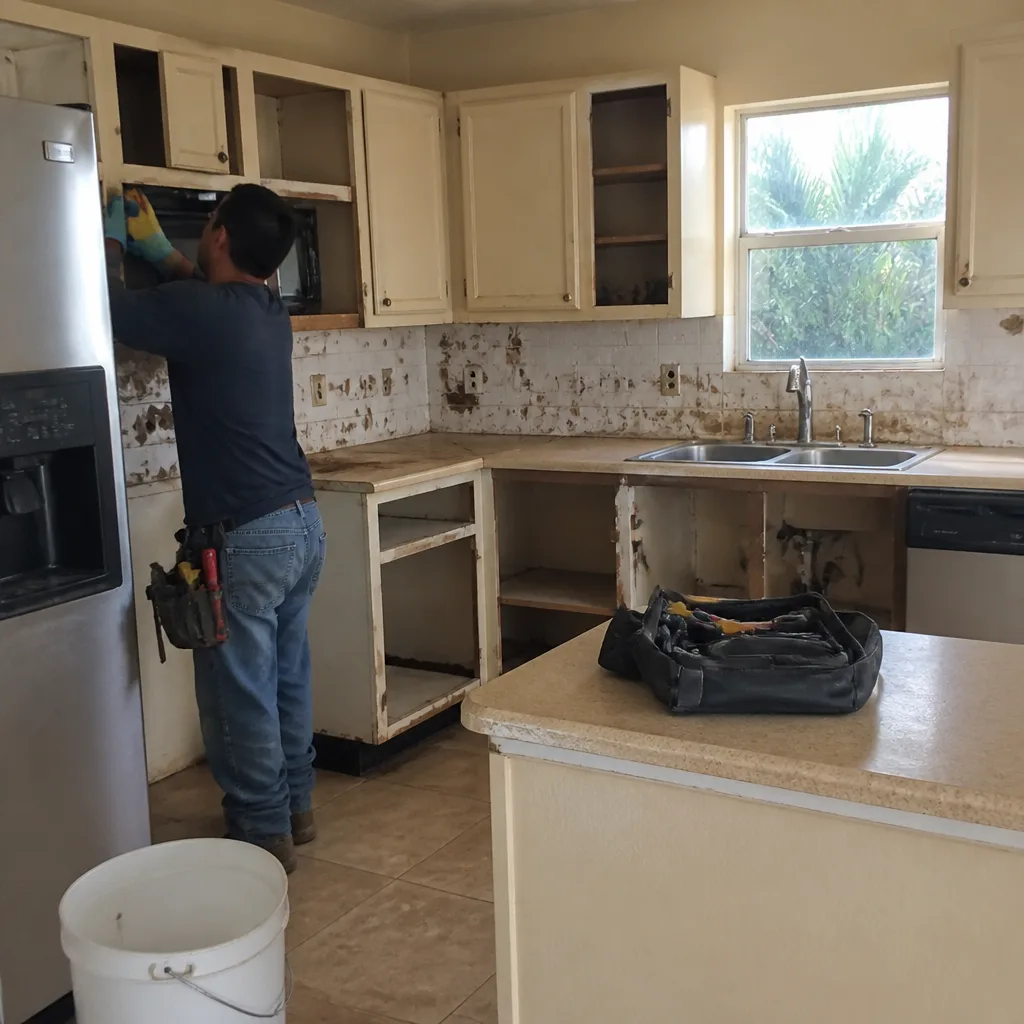 Before
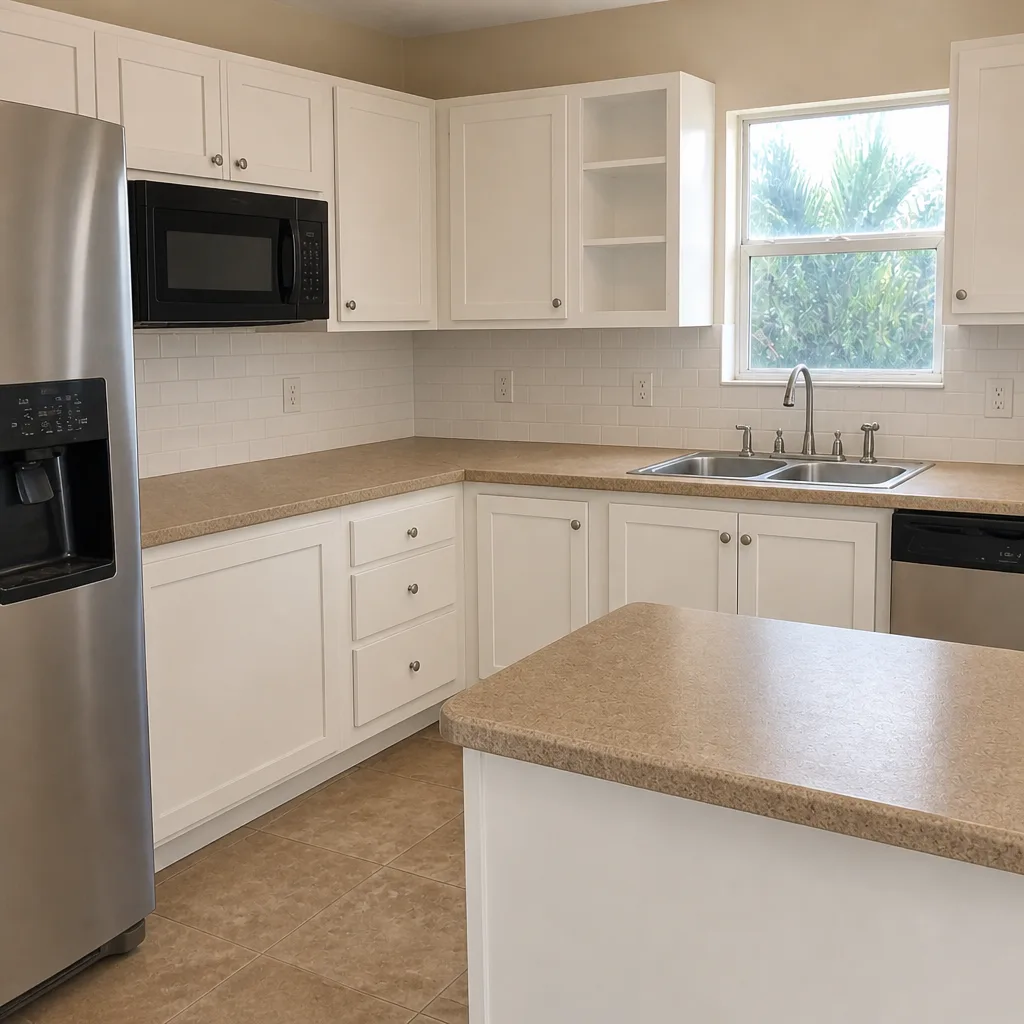 After
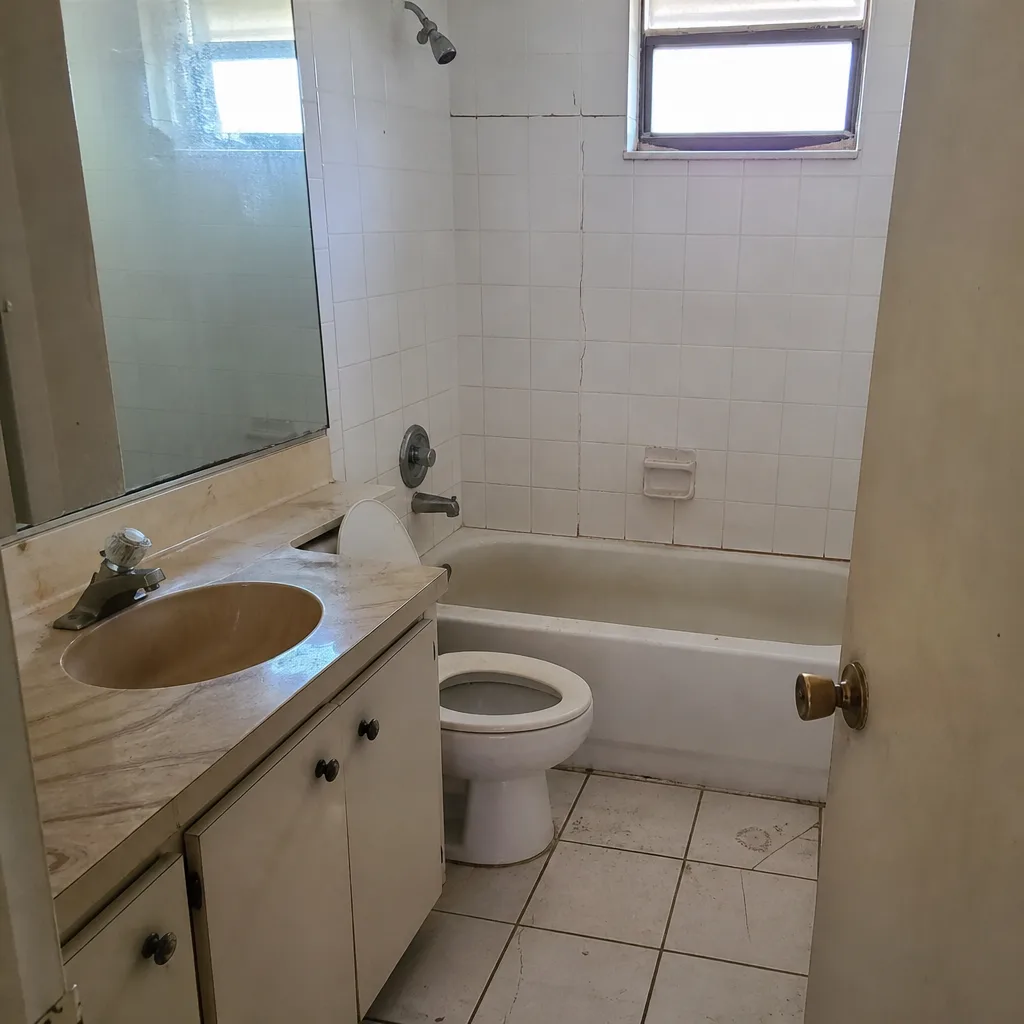 Before
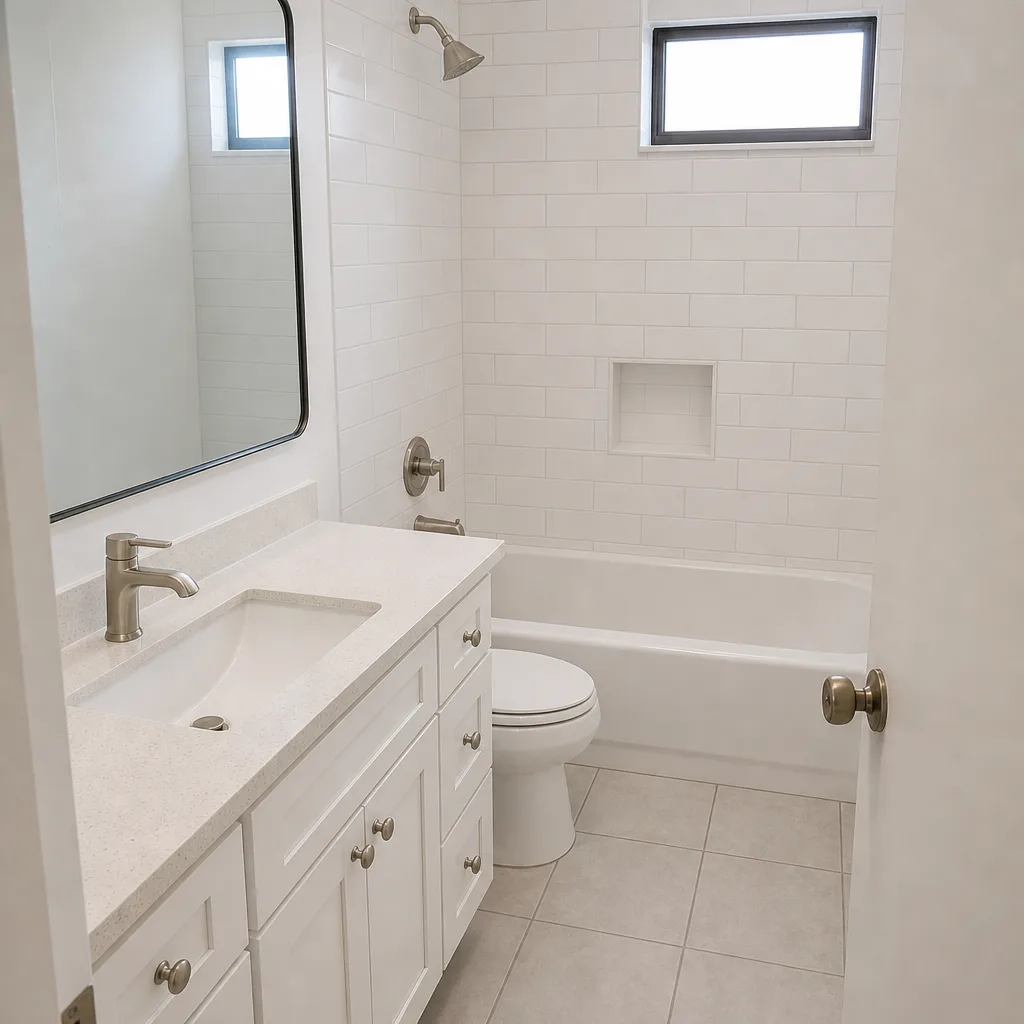 After
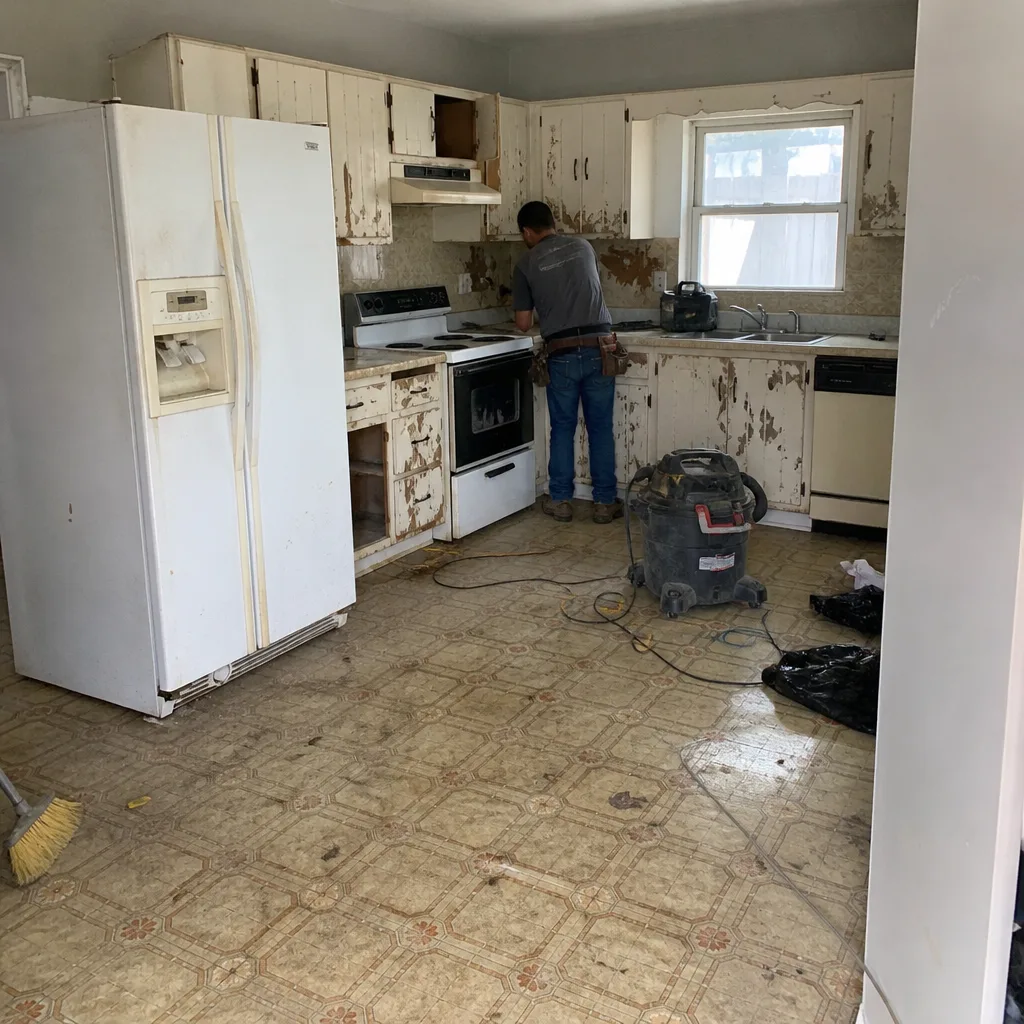 Before
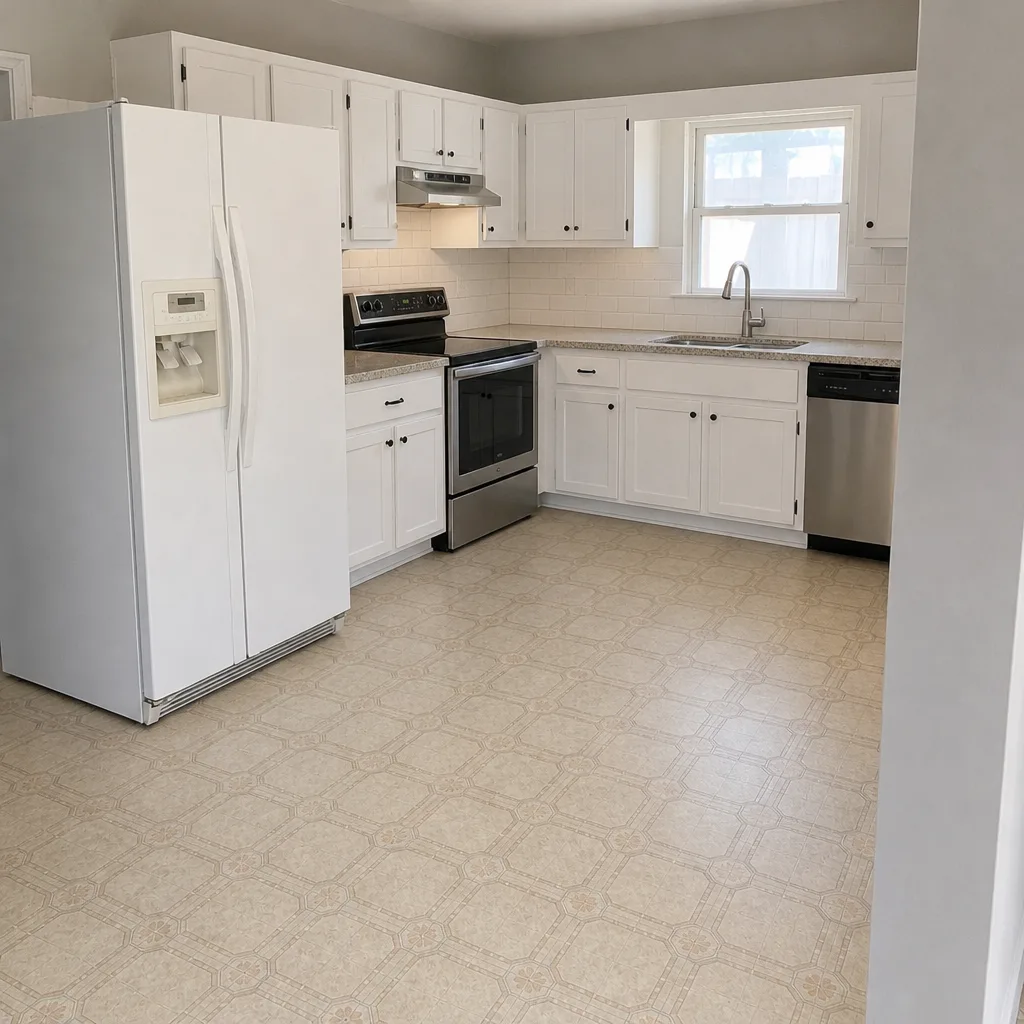 After
When to Call a Professional
Some fence maintenance is genuinely a homeowner job: quarterly vinyl wash, annual aluminum rinse, quick touch-up painting. Others need training, proper tools, and the ability to diagnose structural problems before they get expensive. Call us when:
- Any post is leaning, cracked, or has a failed footing – post replacement requires digging out and re-pouring footings, and improperly set footings will fail again.
- A gate has become difficult to open or close, especially if the post itself moves. This typically points to post settlement or hinge failure, and adjusting the gate alone won’t fix it.
- Your wood fence has widespread gray wood or visible fungal growth that a standard clean doesn’t correct.
- You’re unsure whether a fence is salvageable after a storm or needs replacement.
- You want a written second opinion on a repair quote. Under our Haven Standard, we offer a free second opinion on any competitor’s written estimate, reviewed line by line.
Rowan Construction Group Doral offers free estimates in Doral – call (888) 300-3896. Under Clause 1 of The Haven Standard, the written price is delivered before any work starts, on every job. Our technicians have up to 19 years of experience, and every visit includes a documented photo record at no extra cost. When a repair requires parts we don’t have to source (uncommon but possible on specialty gates), we tell you rather than improvise.
Frequently Asked Questions
Every two years, applied in the November to January window when humidity is lowest and rain risk is minimal. Stain needs at least 24 hours of cure time in relative humidity below 85 percent to bond properly, which is why the rainy season is the wrong time regardless of how convenient it seems. Call (888) 300-3896 for a written quote on professional staining – the number is on the page so you can compare it to another estimate.
No – not without voiding most manufacturer warranties and trapping moisture against the vinyl substrate. Vinyl maintenance is wash-only, with an optional UV protectant spray twice a year. If you want a different fence color, replacement is the correct route. If your vinyl has already been painted and is peeling, call us for an evaluation before attempting correction.
Pressure-treated pine is less expensive and works well in Doral if it’s stained on the correct schedule. Cedar is naturally rot-resistant and holds stain longer but costs roughly 30 to 50 percent more. Both will last similarly in this climate with proper maintenance. The stain protocol matters more than the species choice.
As soon as it’s safe to walk the property – usually within 24 to 72 hours. Wait for standing water to recede and any damaged trees or power lines to be cleared. Do the 10-point checklist in this guide, photograph each section, and don’t attempt to correct structural problems (leaning posts, cracked rails) without professional help. Call (888) 300-3896 for a professional post-storm inspection.
Yes, ideally. Doral’s coastal air accelerates corrosion on zinc-plated hardware, typically to the point of gate-seizing within 4 to 7 years. Stainless steel cost about 30 to 40 percent more upfront and lasts the life of the fence. If you’re already replacing hardware, stainless is the right choice.
Check the posts first. If most posts are plumb and firm, the fence can almost always be repaired – rails, pickets, and hardware are inexpensive to replace individually. If multiple posts are leaning or the footings have failed, replacement is usually more cost-effective. Call us for a free evaluation – we’ll tell you honestly which is the better route.
The Bottom Line
Fence maintenance is material-specific, and getting the schedule wrong costs more than skipping it. Wood needs annual cleaning and bi-annual staining in the November to January window. Vinyl needs quarterly washing and nothing else – no paint, no stain. Aluminum needs an annual wash and touch-up paint on chips. Chain-link needs an annual rust inspection and cold galvanizing spray on bare spots. Stainless hardware pays for itself in coastal Doral air. After any named storm, the 10-point checklist catches problems while they’re still small. A documented maintenance log protects your warranty and gives every future contractor the facts. That’s the entire schedule – and it’s the difference between a fence that lasts 10 years and one that lasts 25.
For a professional inspection, a written repair quote, or a second opinion on any fence estimate, call Rowan Construction Group Doral at (888) 300-3896 for a free estimate. Under our 365-Day Done Right Promise, if it’s not done right, we make it right. Written price before work starts – always.
Written by the team at Rowan Construction Group Doral.